

Tiny Spheres, Lasting Landscapes

First in English:
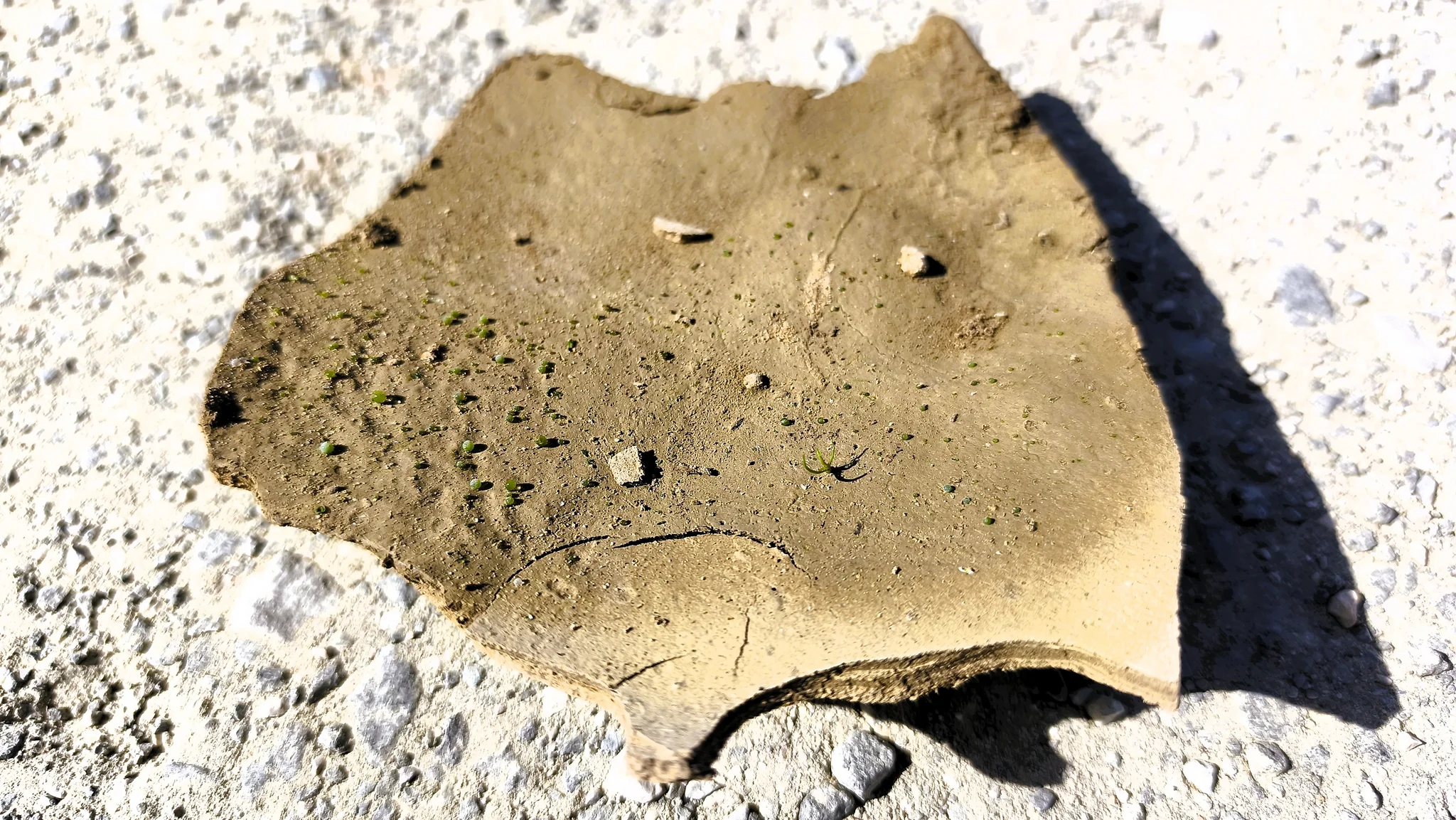
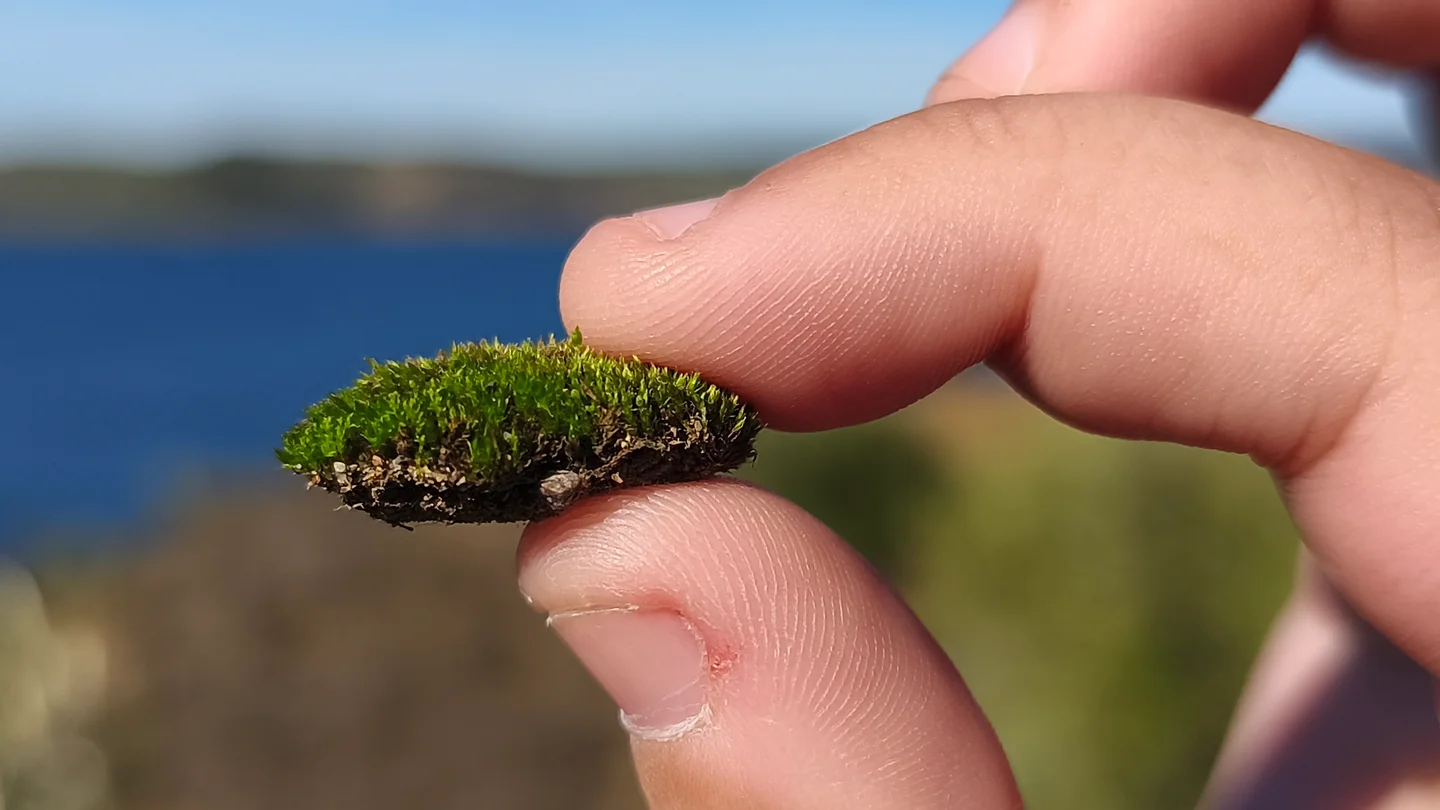
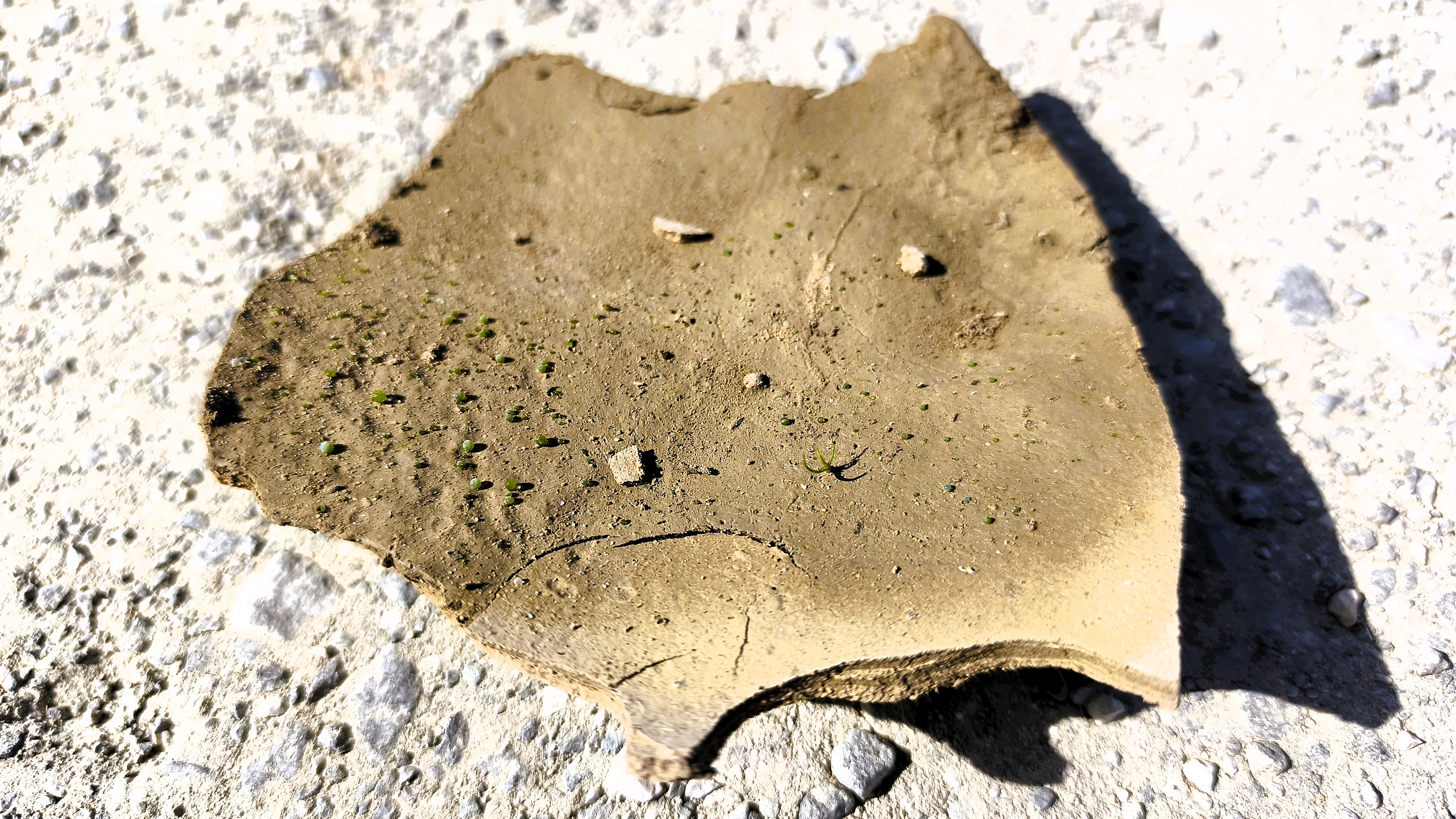
The photograph shows numerous specimens of Botrydium (probably Botrydium granulatum) emerging from the soil surface of a fluvial terrace along the Gadaira River, near Seville in southwestern Spain. The spherical green vesicles borne on short stalks are the visible reproductive structures of this terrestrial yellow-green alga, which develops on moist, fine-textured soils following rainfall events.
Although often overlooked because of their small size and ephemeral appearance, Botrydium species are among the pioneer organisms that colonize bare soil surfaces. Together with cyanobacteria, microalgae, lichens, bryophytes and other microorganisms, they contribute to the formation of biological soil crusts (biocrusts), living communities that occupy the uppermost millimetres of the soil.
Biocrust organisms play an important role in pedogenesis. Through the production of extracellular polymeric substances and other organic compounds, they bind mineral particles into stable aggregates, enhancing soil structure and reducing susceptibility to erosion by wind and water. Their metabolic activity contributes organic carbon to the soil surface, promotes nutrient cycling and creates microhabitats that facilitate the establishment of more complex biological communities. In early stages of soil development, these biological pioneers help transform unconsolidated sediment into a more organized and resilient soil system.
The image highlights a frequently overlooked stage of soil formation, where microscopic and cryptic organisms act as ecosystem engineers, stabilizing the soil surface and initiating processes that ultimately support higher plants and terrestrial ecosystems.
Ahora, en español:
La fotografía muestra numerosos ejemplares de Botrydium (probablemente Botrydium granulatum) emergiendo sobre la superficie del suelo en una terraza fluvial del río Gadaira, cerca de Sevilla, en el suroeste de España. Las vesículas esféricas de color verde, sostenidas por cortos pedúnculos, constituyen las estructuras visibles de este alga terrestre amarillo-verde, que se desarrolla sobre suelos húmedos y de textura fina tras episodios de lluvia.
Aunque suelen pasar desapercibidas por su pequeño tamaño y carácter efímero, las especies de Botrydium figuran entre los organismos pioneros que colonizan superficies desnudas. Junto con cianobacterias, microalgas, líquenes, briófitos y otros microorganismos, contribuyen a la formación de costras biológicas del suelo (biocostras), comunidades vivas que ocupan los primeros milímetros de la superficie edáfica.
Los organismos que forman biocostras desempeñan un papel fundamental en la pedogénesis. Mediante la producción de sustancias poliméricas extracelulares y otros compuestos orgánicos, unen las partículas minerales formando agregados estables, mejoran la estructura del suelo y reducen la susceptibilidad a la erosión hídrica y eólica. Su actividad metabólica aporta carbono orgánico a la superficie, favorece el reciclado de nutrientes y genera microhábitats que facilitan el establecimiento de comunidades biológicas más complejas. En las etapas iniciales del desarrollo edáfico, estos organismos pioneros contribuyen a transformar sedimentos poco consolidados en sistemas edáficos más organizados y resilientes.
La imagen pone de relieve una fase frecuentemente ignorada de la formación del suelo, en la que organismos microscópicos y discretos actúan como auténticos ingenieros del ecosistema, estabilizando la superficie e iniciando procesos que acabarán sustentando la vegetación superior y los ecosistemas terrestres.
Categories
Reuse
Creative Commons Attribution 4.0 International (CC BY 4.0) (opens in a new window)Credit: Antonio Jordán (distributed via imaggeo.egu.eu)



Comments
No comments yet. Be the first to share your thoughts.