

The Green Side of the Stone

First in English:
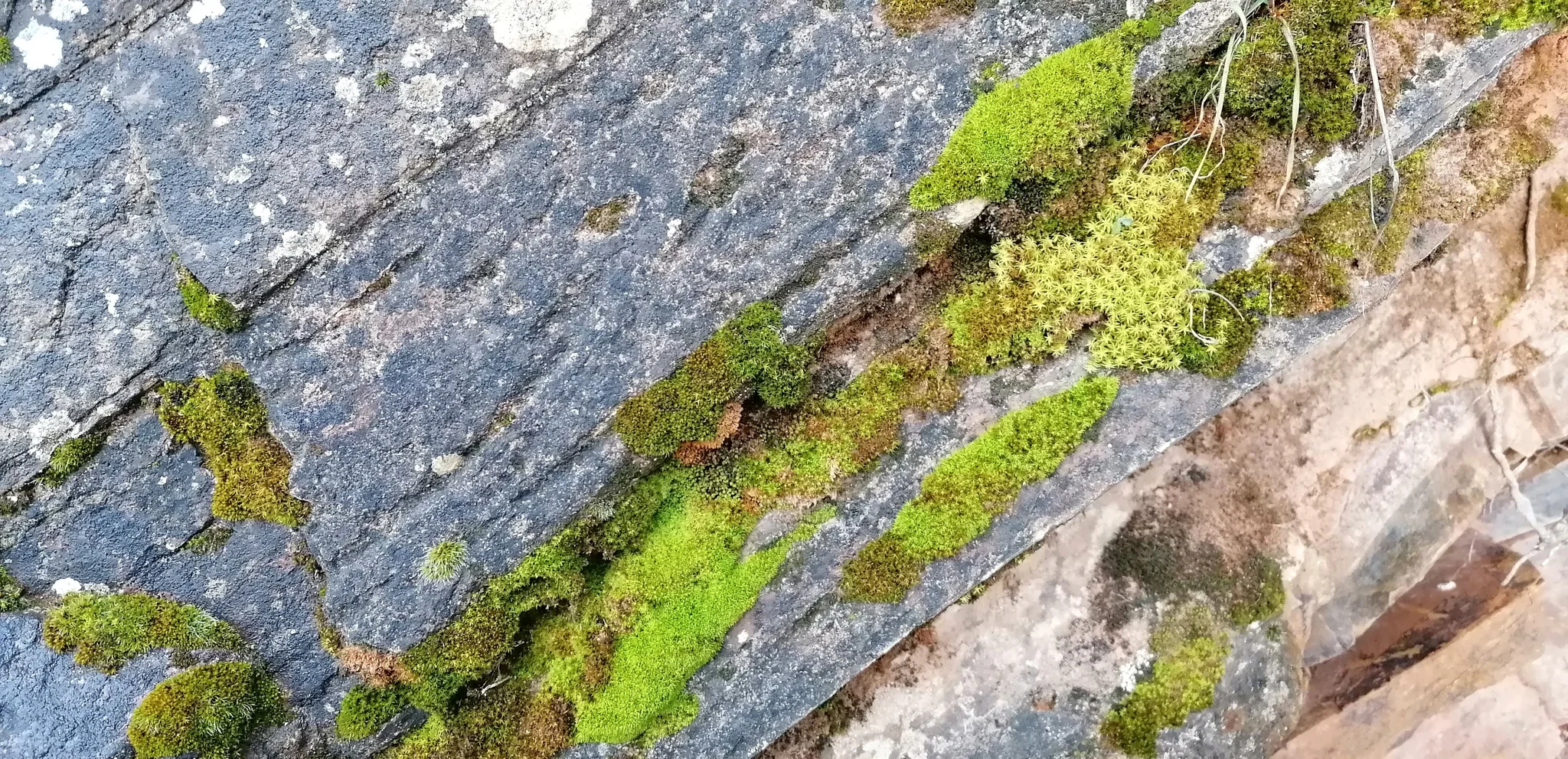
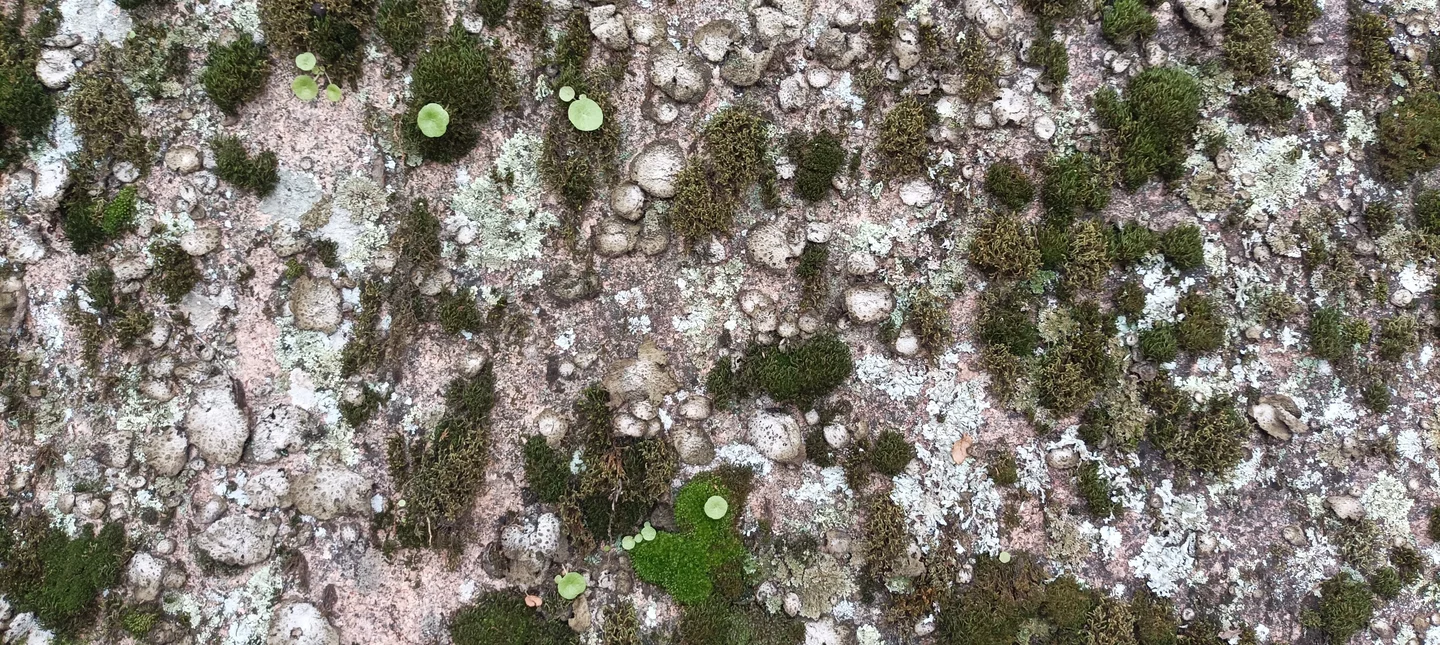
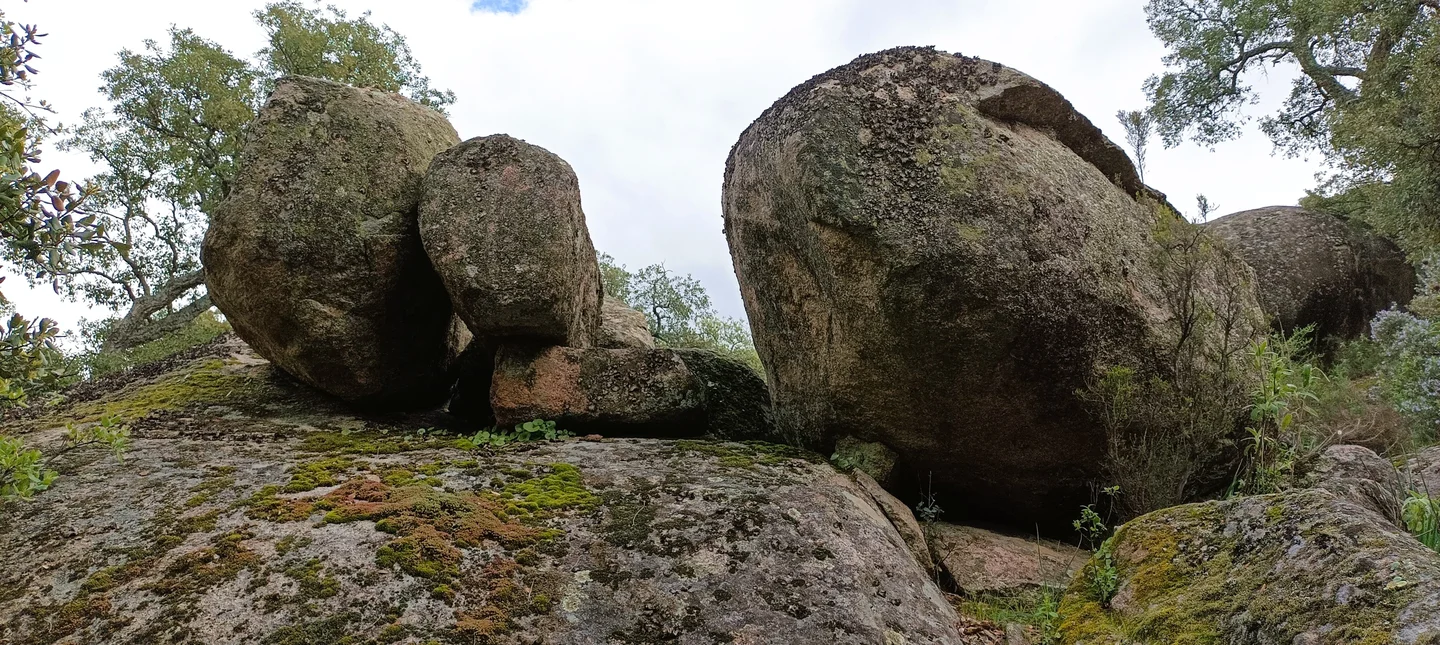
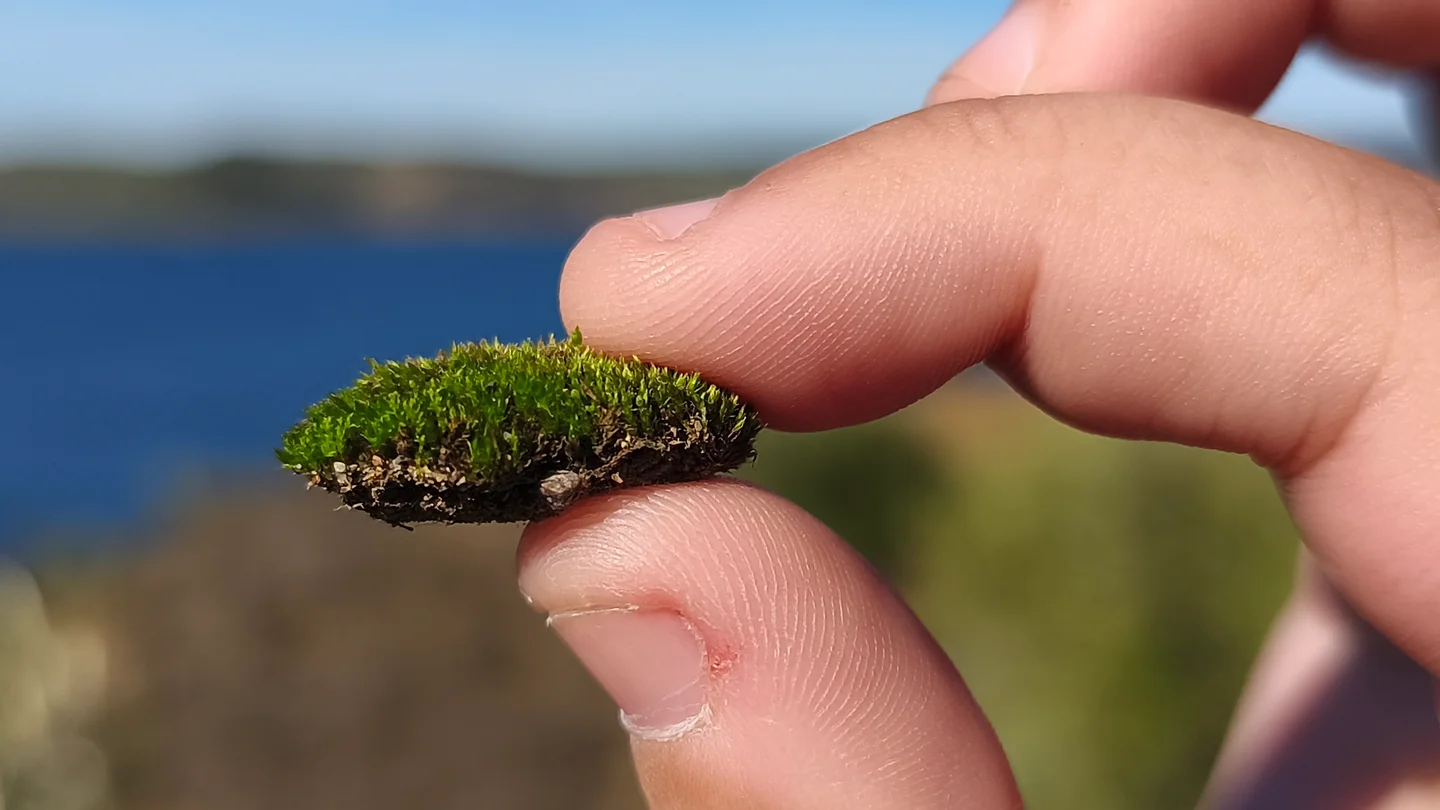
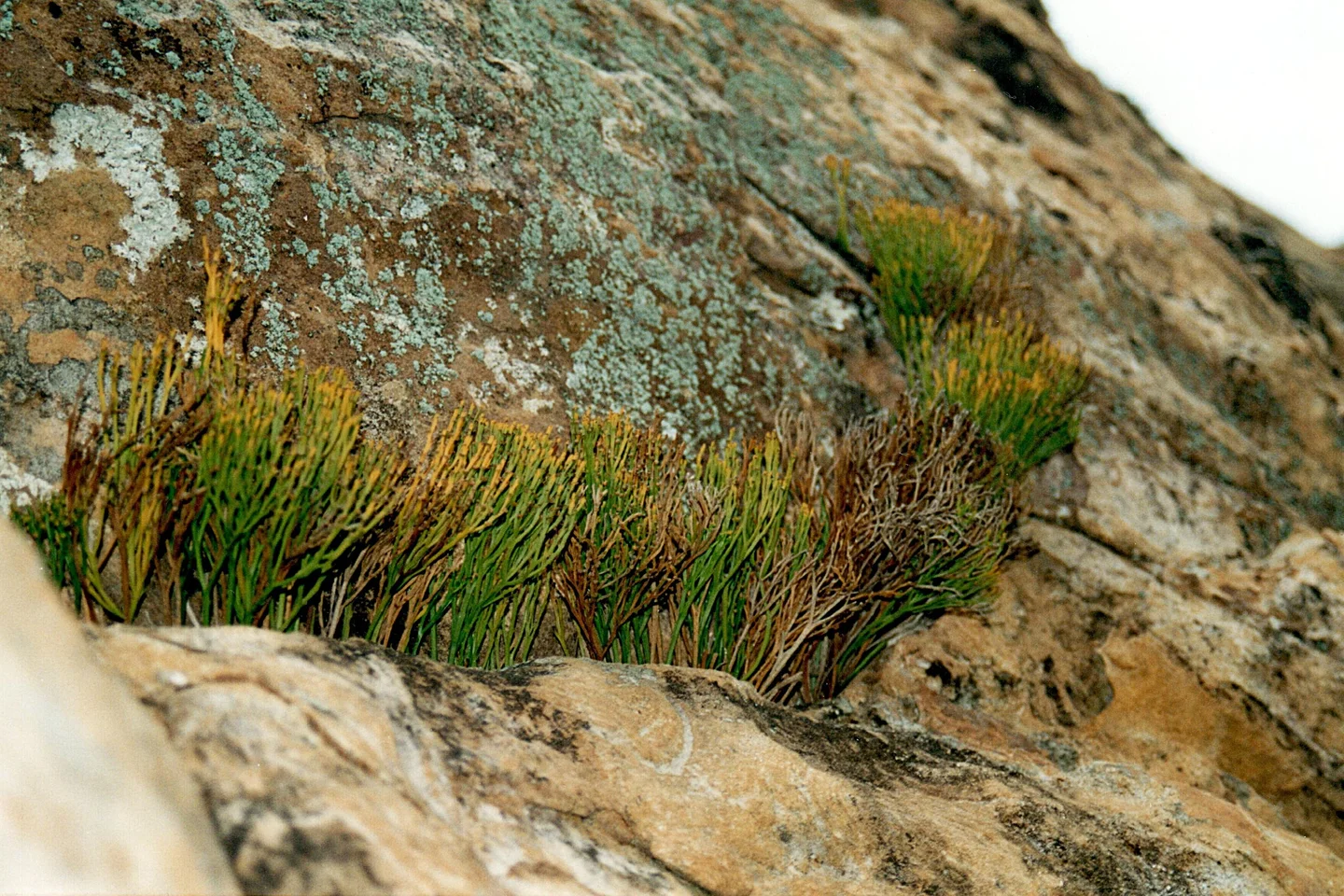
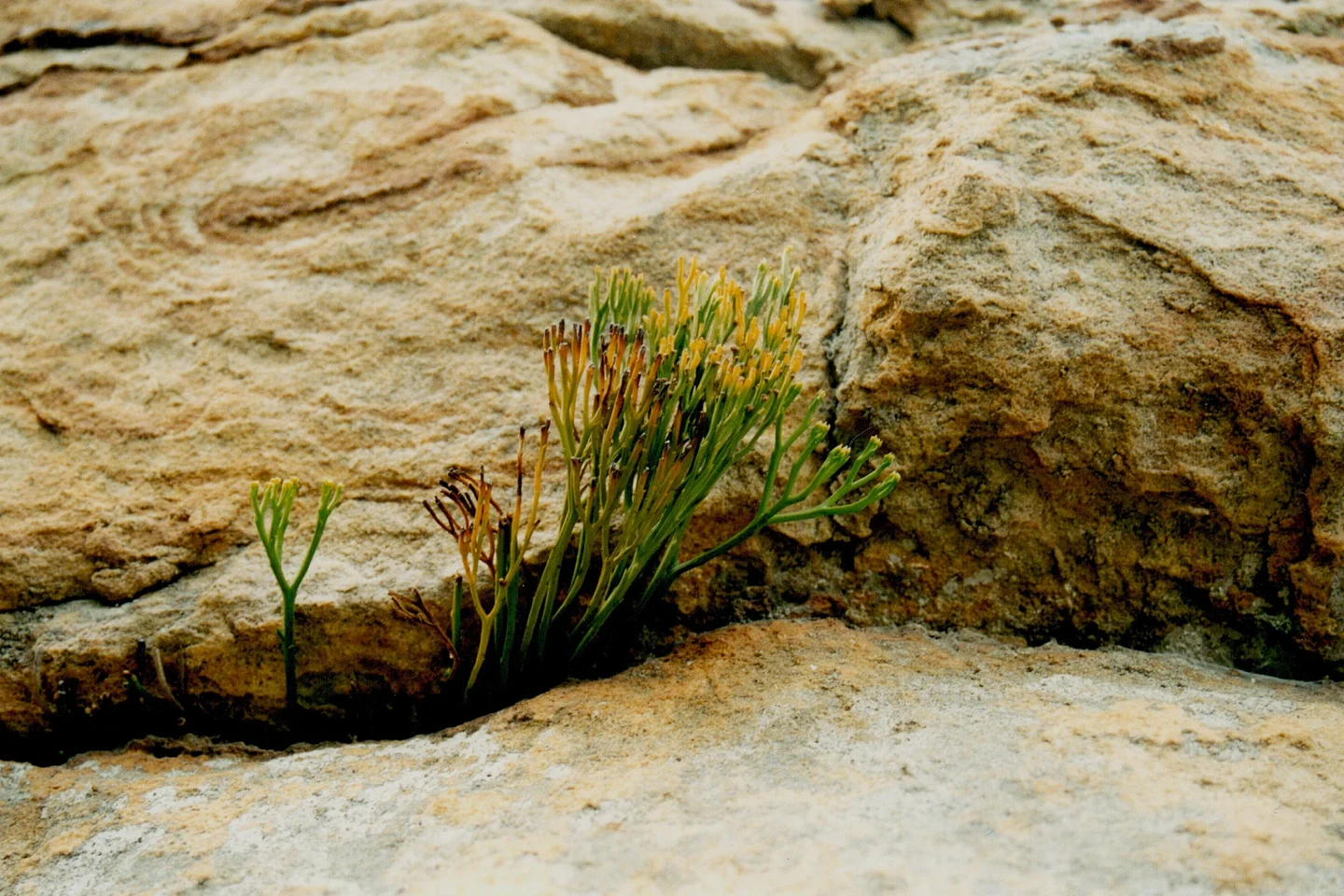
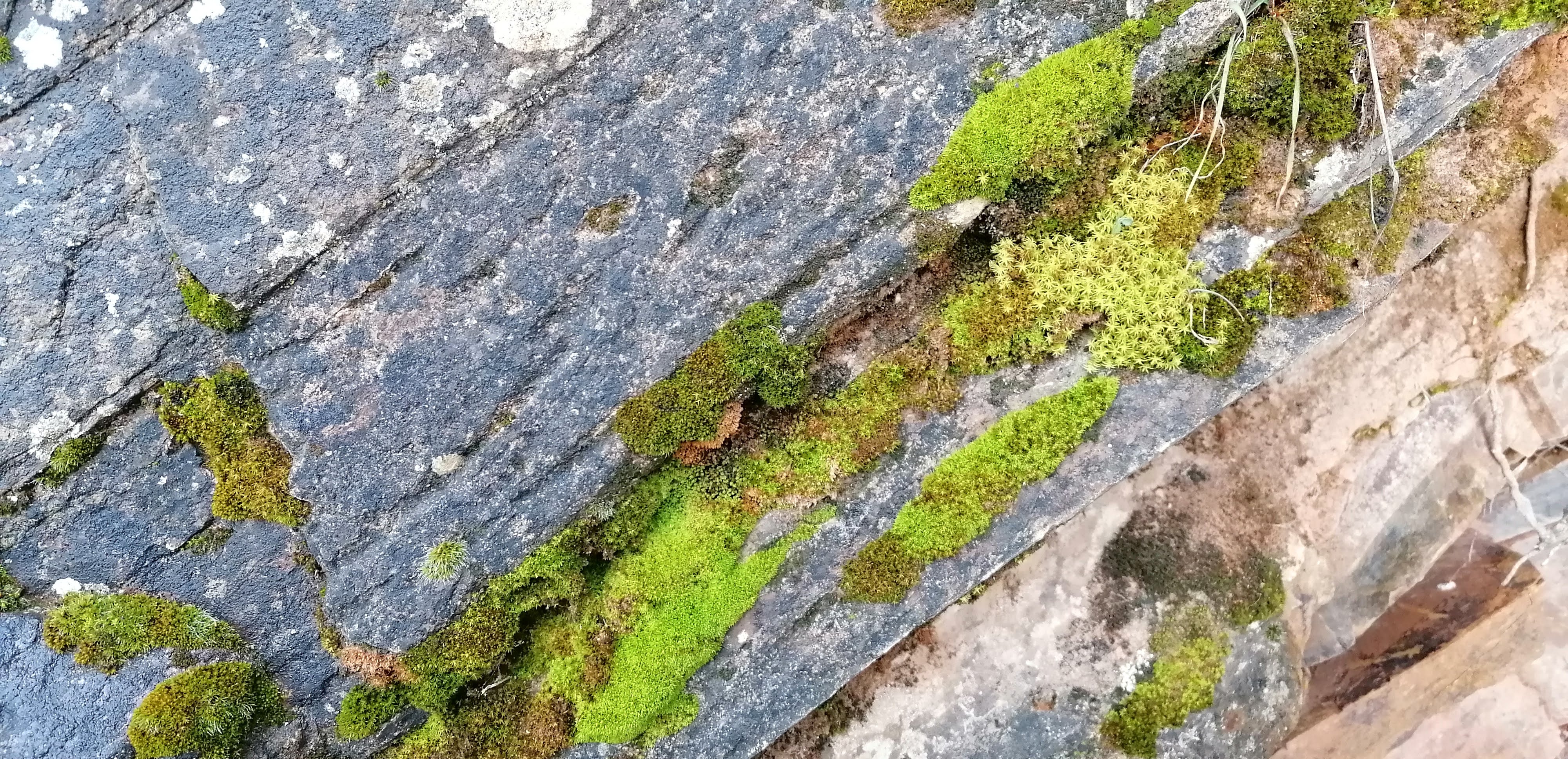
Who says rocks are lifeless? 🌱 Look closely and you'll find entire miniature ecosystems growing on their surfaces! These mosses, covering patches of exposed bedrock near Cazalla de la Sierra (Sierra Norte de Sevilla Natural Park, Spain), play an important role in the early stages of soil formation.
Mosses are non-vascular plants, meaning they lack the specialized tissues that transport water and nutrients in larger plants. They absorb water and dissolved nutrients directly across their surfaces and have no true roots, although they possess tiny structures called rhizoids that help them attach to the substrate.
But their role goes far beyond simply covering the rock. Moss cushions trap mineral particles, dust and organic debris, while retaining water and creating a more humid microenvironment. Their biological activity can also contribute to mineral weathering through chemical interactions with the rock surface. Repeated wetting and drying, together with temperature fluctuations, further contribute to the gradual breakdown of exposed rock.
As mosses grow and eventually decompose, organic matter accumulates among the mineral particles. This creates increasingly suitable conditions for microorganisms and other organisms, and eventually for larger plants to establish themselves.
🪨➡️🌱 Slowly but steadily, mosses help transform bare rock into a habitat where soil can begin to develop. Sometimes, the first steps towards a new soil ecosystem are surprisingly small!
Ahora, en español:
¿Quién dice que las rocas carecen de vida? 🌱 ¡Si miramos de cerca, descubriremos pequeños ecosistemas creciendo sobre su superficie! Estos musgos, que cubren diferentes zonas del lecho rocoso cerca de Cazalla de la Sierra (Parque Natural Sierra Norte de Sevilla, España), desempeñan un papel importante en las primeras etapas de la formación del suelo.
Los musgos son plantas no vasculares, lo que significa que carecen de los tejidos especializados que transportan agua y nutrientes en las plantas de mayor tamaño. Absorben agua y nutrientes disueltos directamente a través de su superficie y no tienen raíces verdaderas, aunque poseen unas pequeñas estructuras llamadas rizoides que les ayudan a fijarse al sustrato.
Pero su función va mucho más allá de cubrir la roca. Los pequeños cojinetes de musgo atrapan partículas minerales, polvo y restos orgánicos, al tiempo que retienen agua y crean un microambiente más húmedo. Su actividad biológica también puede contribuir a la meteorización de los minerales mediante interacciones químicas con la superficie rocosa. Los ciclos repetidos de humectación y desecación, junto con las fluctuaciones de temperatura, favorecen además la degradación progresiva de la roca expuesta.
A medida que los musgos crecen y finalmente se descomponen, la materia orgánica se acumula entre las partículas minerales. Esto genera condiciones cada vez más favorables para los microorganismos y otros organismos, y posteriormente para el establecimiento de plantas de mayor tamaño.
🪨➡️🌱 Poco a poco, los musgos contribuyen a transformar la roca desnuda en un hábitat donde puede comenzar a desarrollarse el suelo. ¡A veces, los primeros pasos hacia un nuevo ecosistema edáfico son sorprendentemente pequeños!
Categories
Reuse
Creative Commons Attribution 4.0 International (CC BY 4.0) (opens in a new window)Credit: Antonio Jordán (distributed via imaggeo.egu.eu)






Comments
No comments yet. Be the first to share your thoughts.