

Once Upon a Time Beneath the Water

First in English:
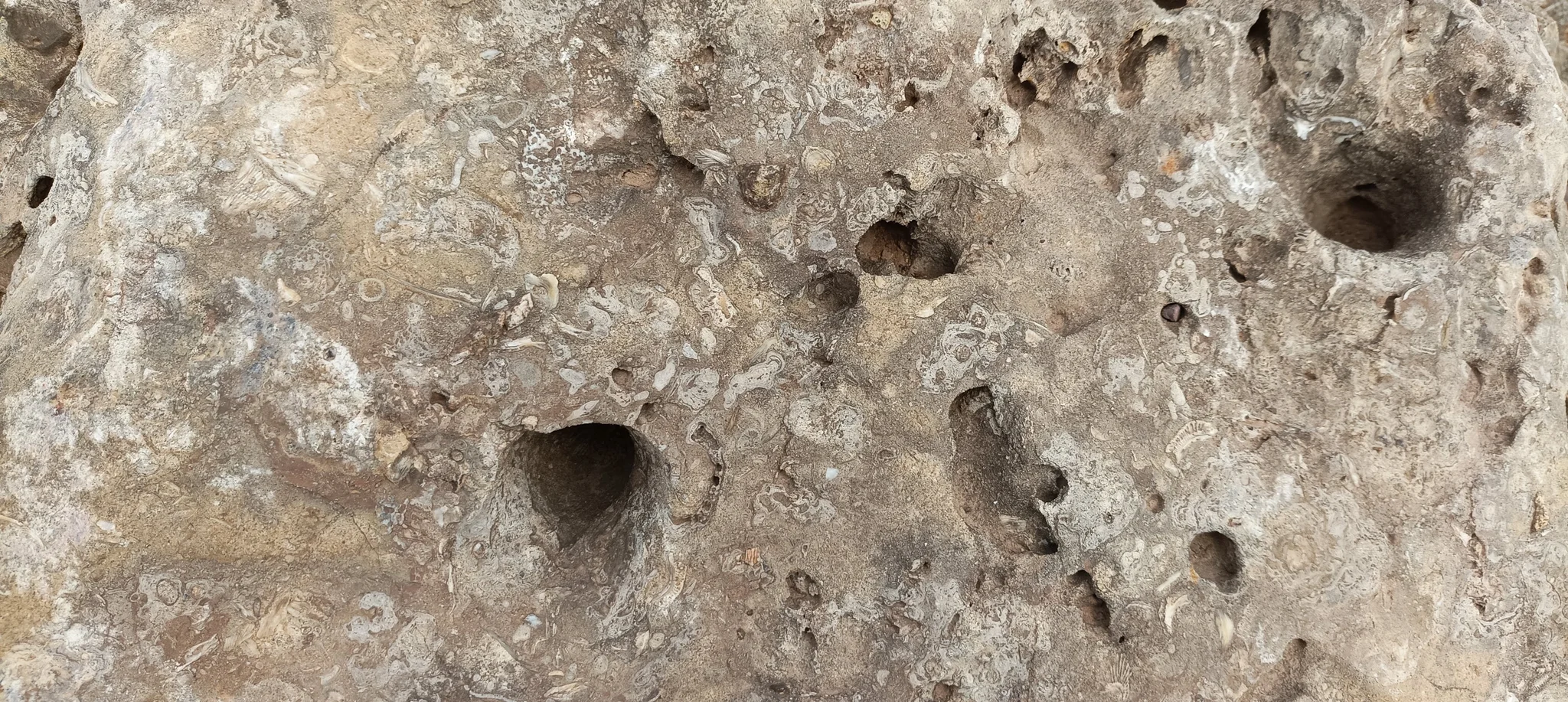
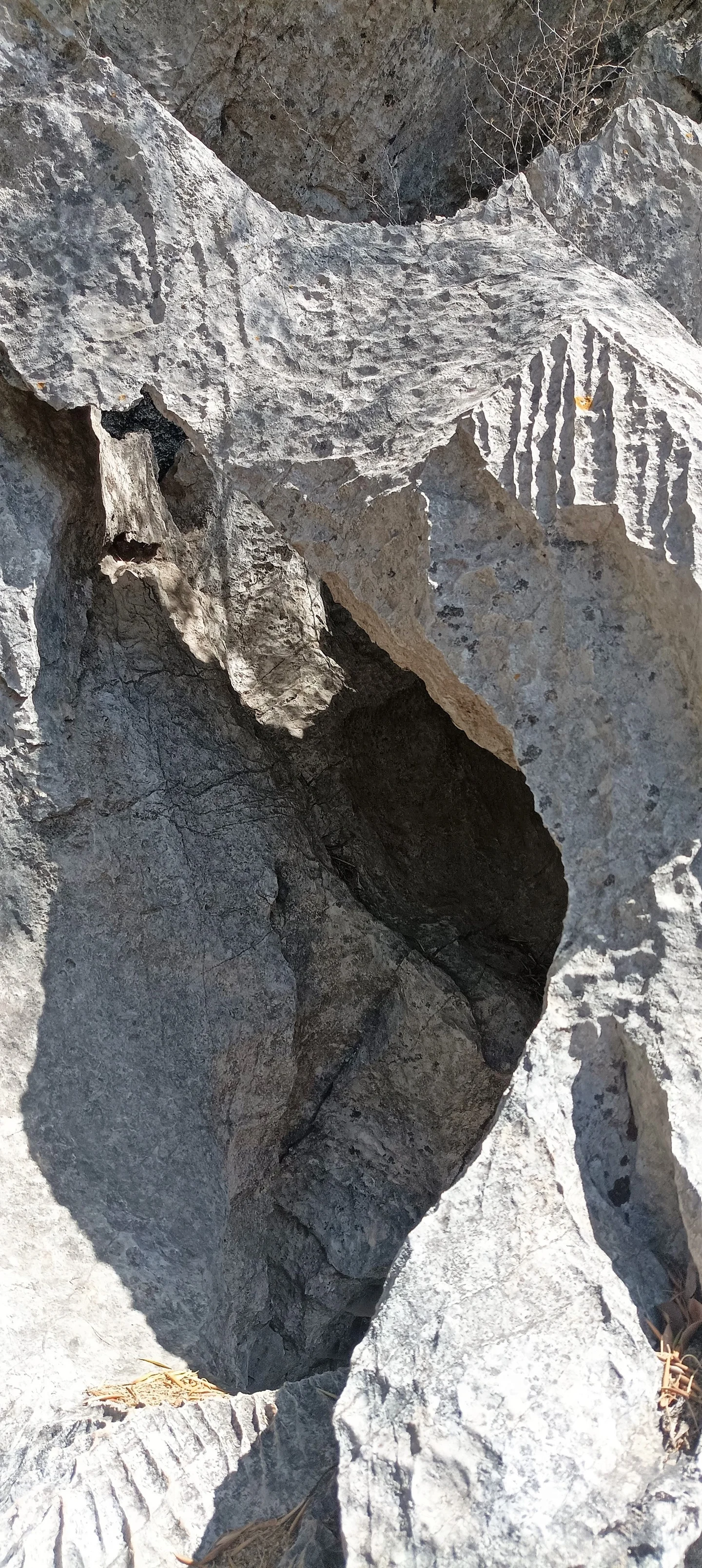
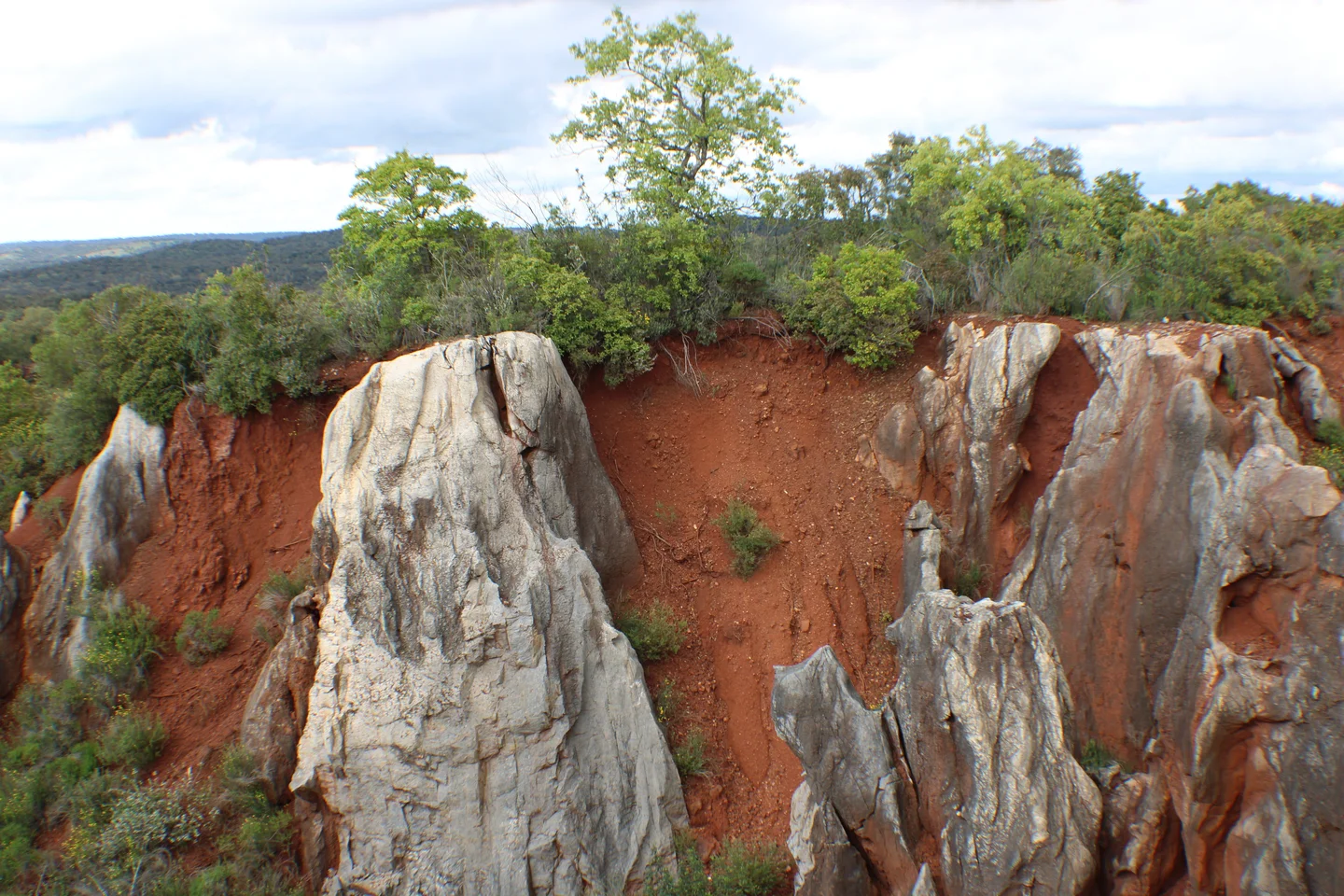
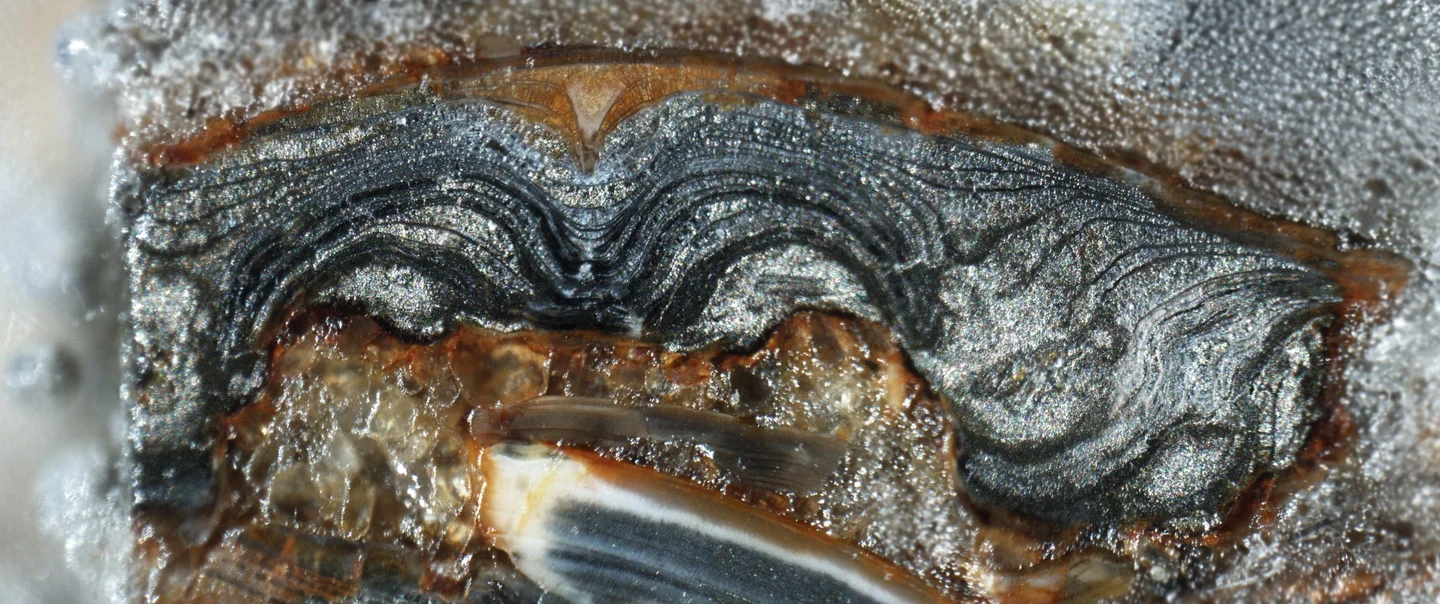
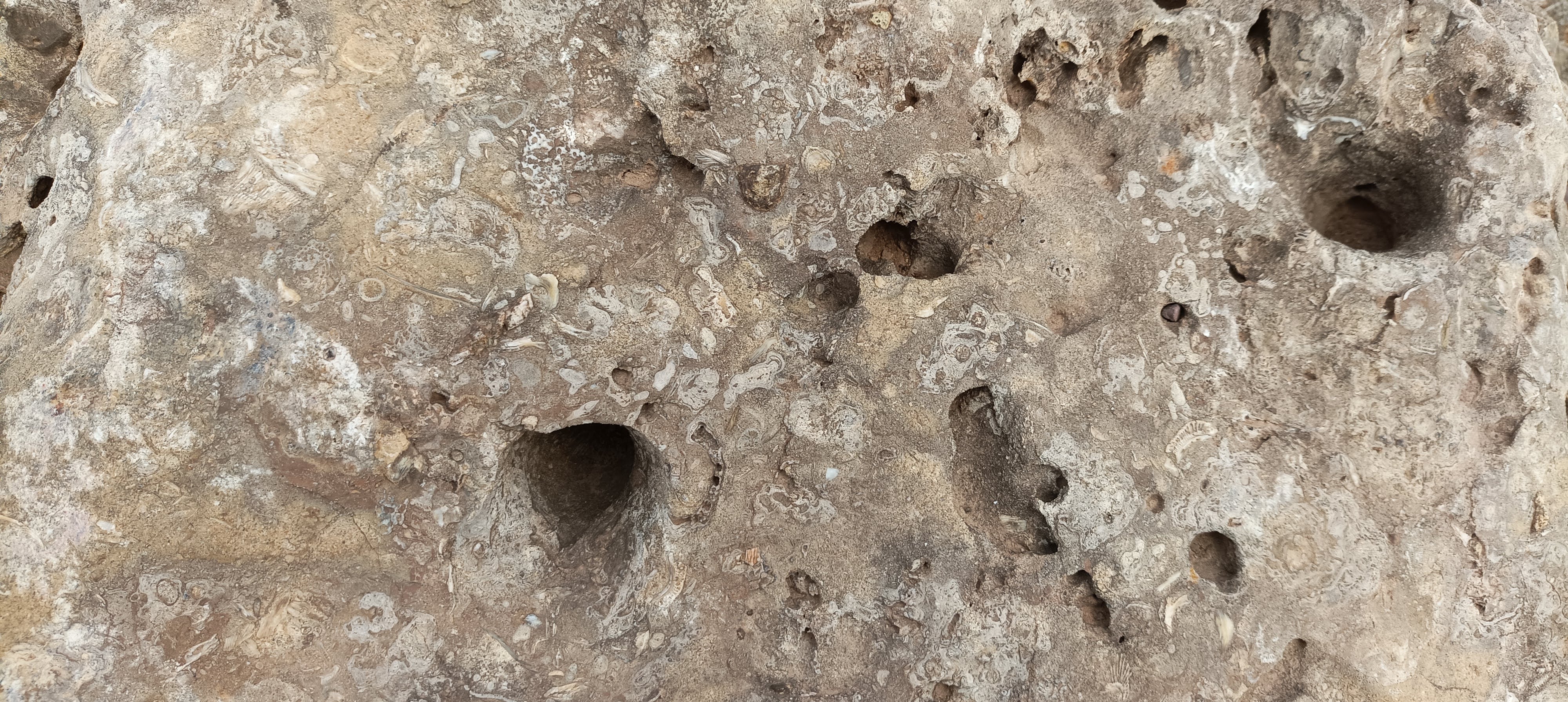
This limestone outcrop near El Berrocal, in Almadén de la Plata (Seville, Spain), is a little window into the distant past. 🐚 Its surface is packed with fossil remains, including fragments and cross-sections of ancient marine organisms. These fossils tell us that the rocks formed in a marine environment, where the remains of organisms accumulated and became incorporated into carbonate sediments that eventually turned into limestone.
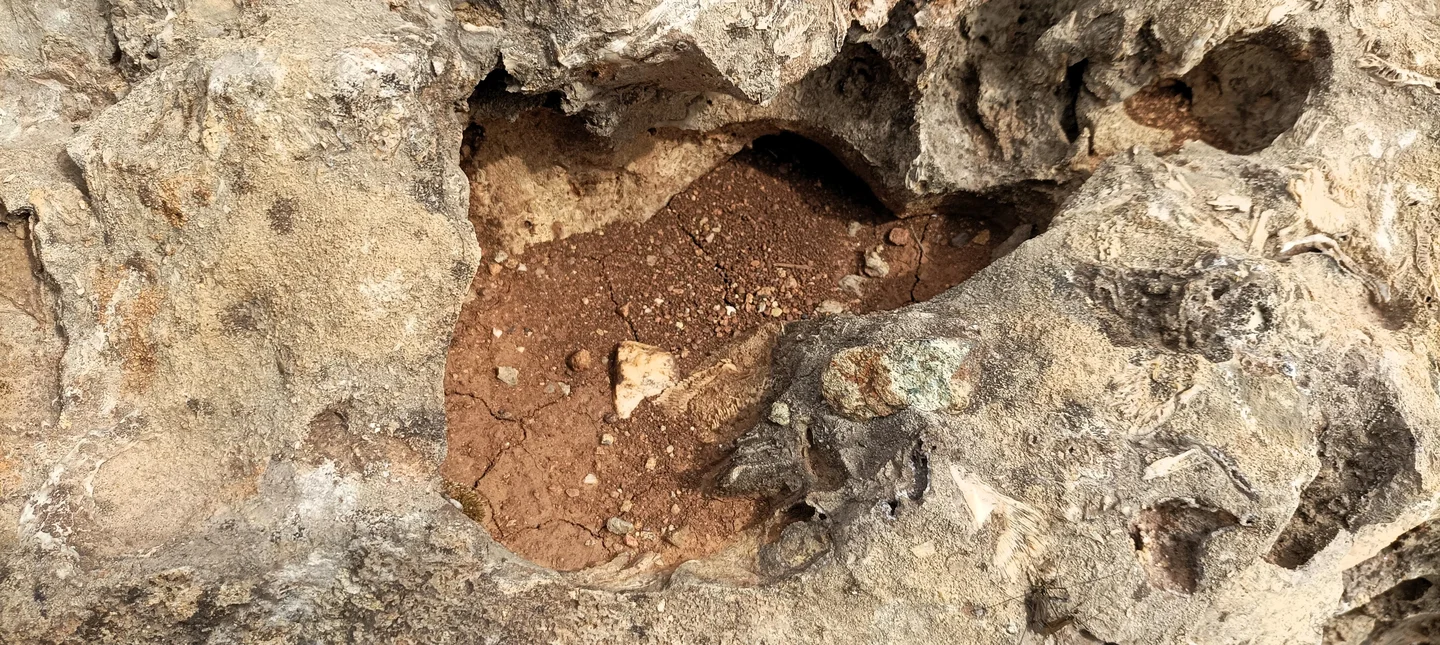
But the rock is still changing! 💧 Rainwater absorbs carbon dioxide from the atmosphere and soil, forming a weak solution of carbonic acid. This water can dissolve calcium carbonate, the main mineral component of limestone, gradually enlarging small pores, fractures and other weaknesses in the rock. The result is a collection of irregular cavities and hollows produced by chemical weathering.
A remarkable combination: the limestone preserves evidence of ancient life while its surface records the ongoing work of water and weathering. 🌍
Ahora, en español:
Este afloramiento de caliza cerca de El Berrocal, en Almadén de la Plata (Sevilla, España), es una pequeña ventana al pasado remoto. 🐚 Su superficie está repleta de restos fósiles, incluidos fragmentos y secciones de antiguos organismos marinos. Estos fósiles nos indican que las rocas se formaron en un ambiente marino, donde los restos de organismos se acumularon y quedaron incorporados a sedimentos carbonatados que, con el tiempo, acabaron transformándose en caliza.
¡Pero la roca sigue cambiando! 💧 El agua de lluvia absorbe dióxido de carbono de la atmósfera y del suelo, formando una solución débil de ácido carbónico. Esta agua puede disolver el carbonato de calcio, el principal componente mineral de la caliza, y ensanchar progresivamente pequeños poros, fracturas y otras zonas de debilidad de la roca. El resultado es un conjunto de cavidades y oquedades irregulares producidas por la meteorización química.
Una combinación extraordinaria: la caliza conserva evidencias de vida antigua mientras su superficie registra el trabajo continuo del agua y la meteorización. 🌍
Categories
Reuse
Creative Commons Attribution 4.0 International (CC BY 4.0) (opens in a new window)Credit: Antonio Jordán (distributed via imaggeo.egu.eu)








Comments
No comments yet. Be the first to share your thoughts.