

A Small Place Where Soil Begins

First in English:
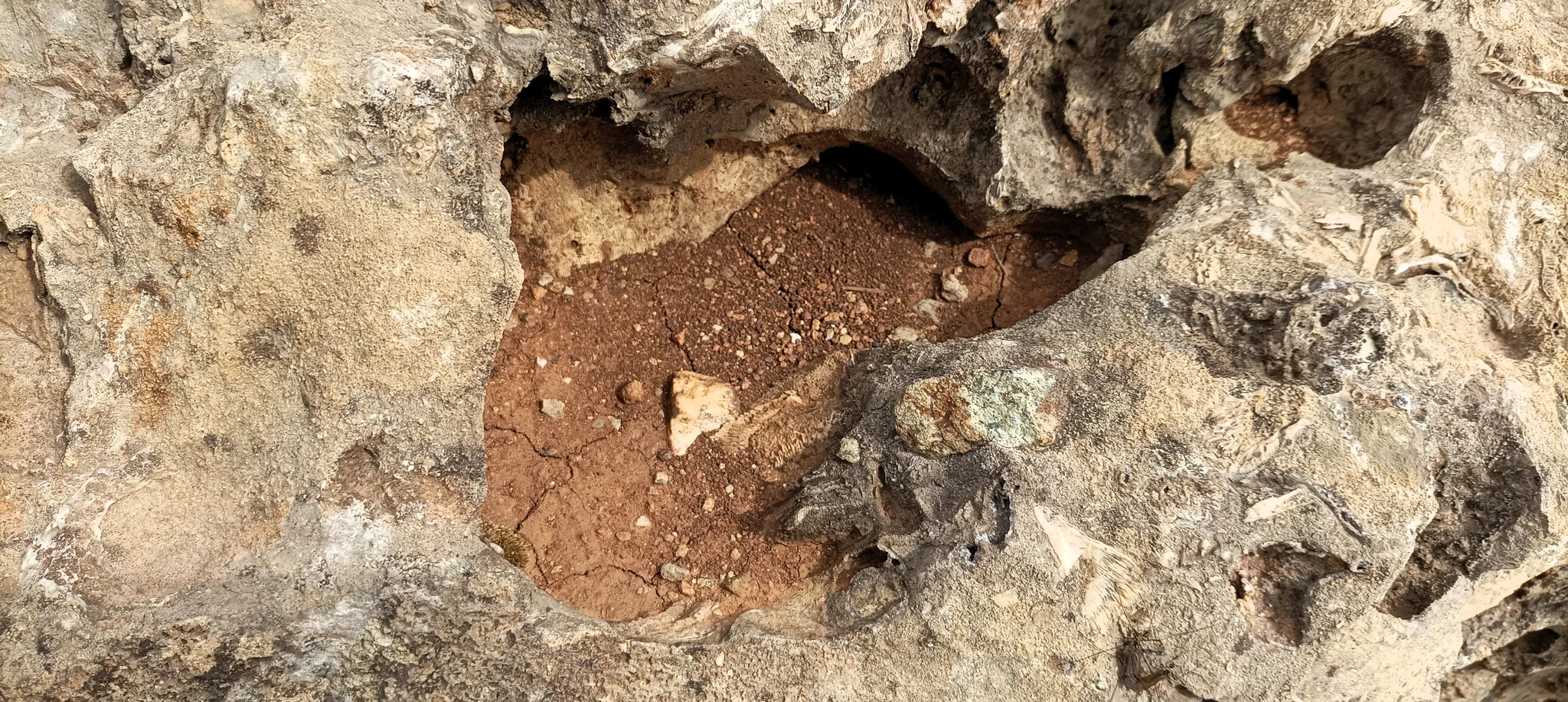
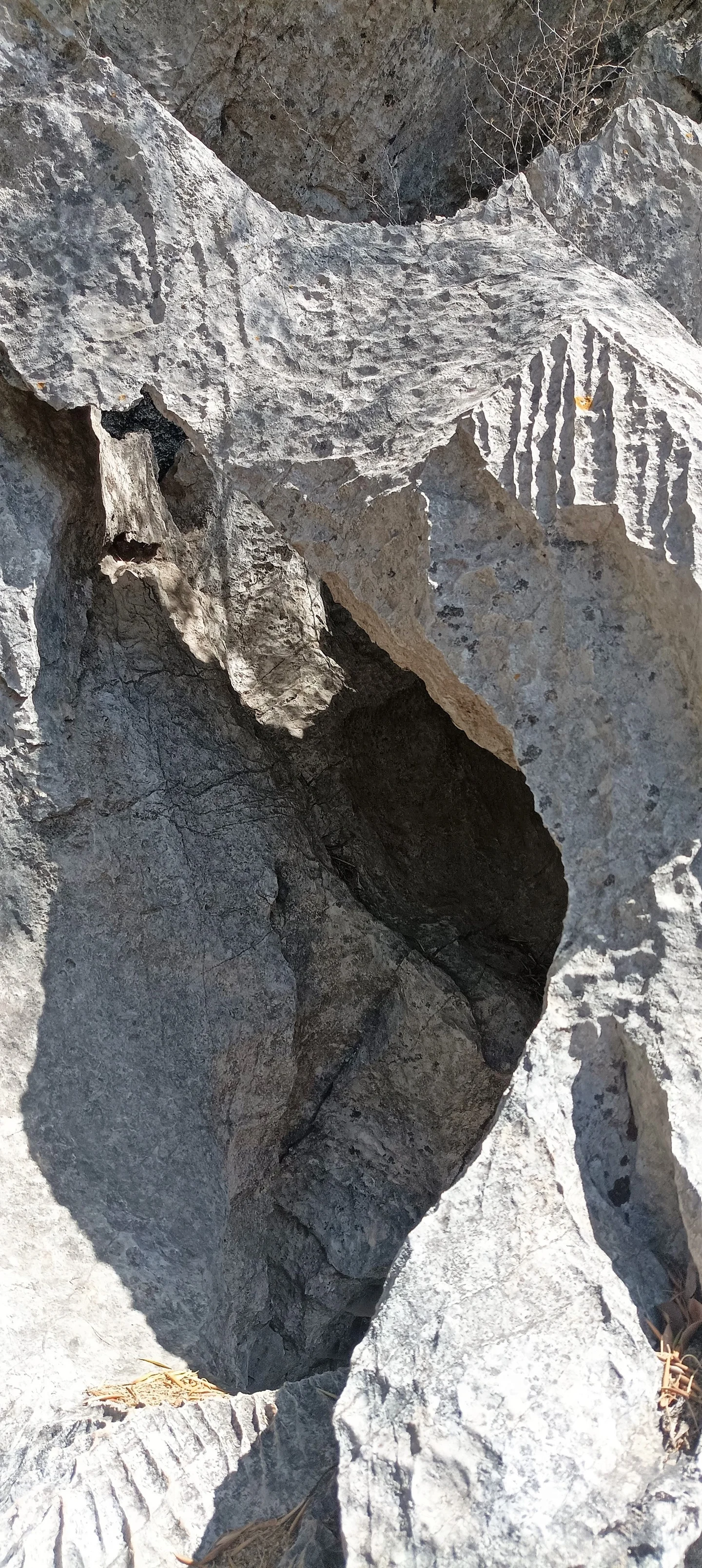
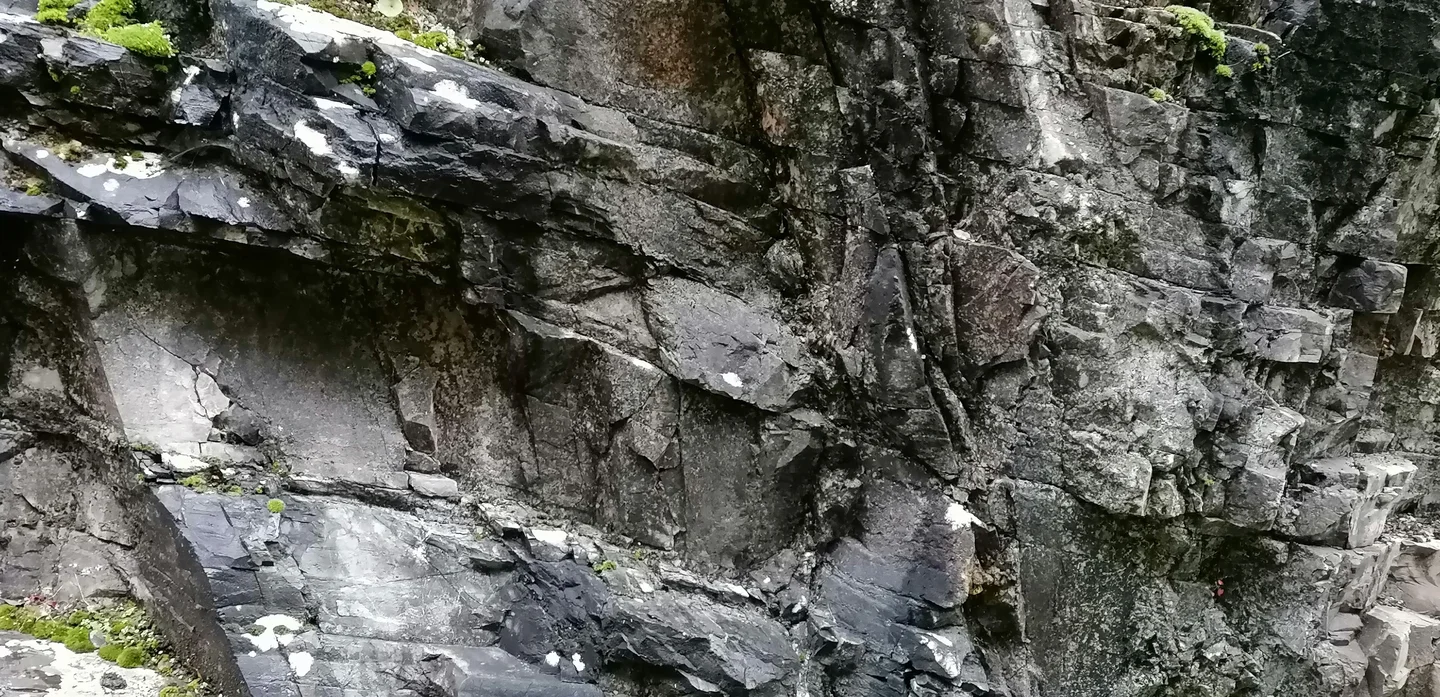
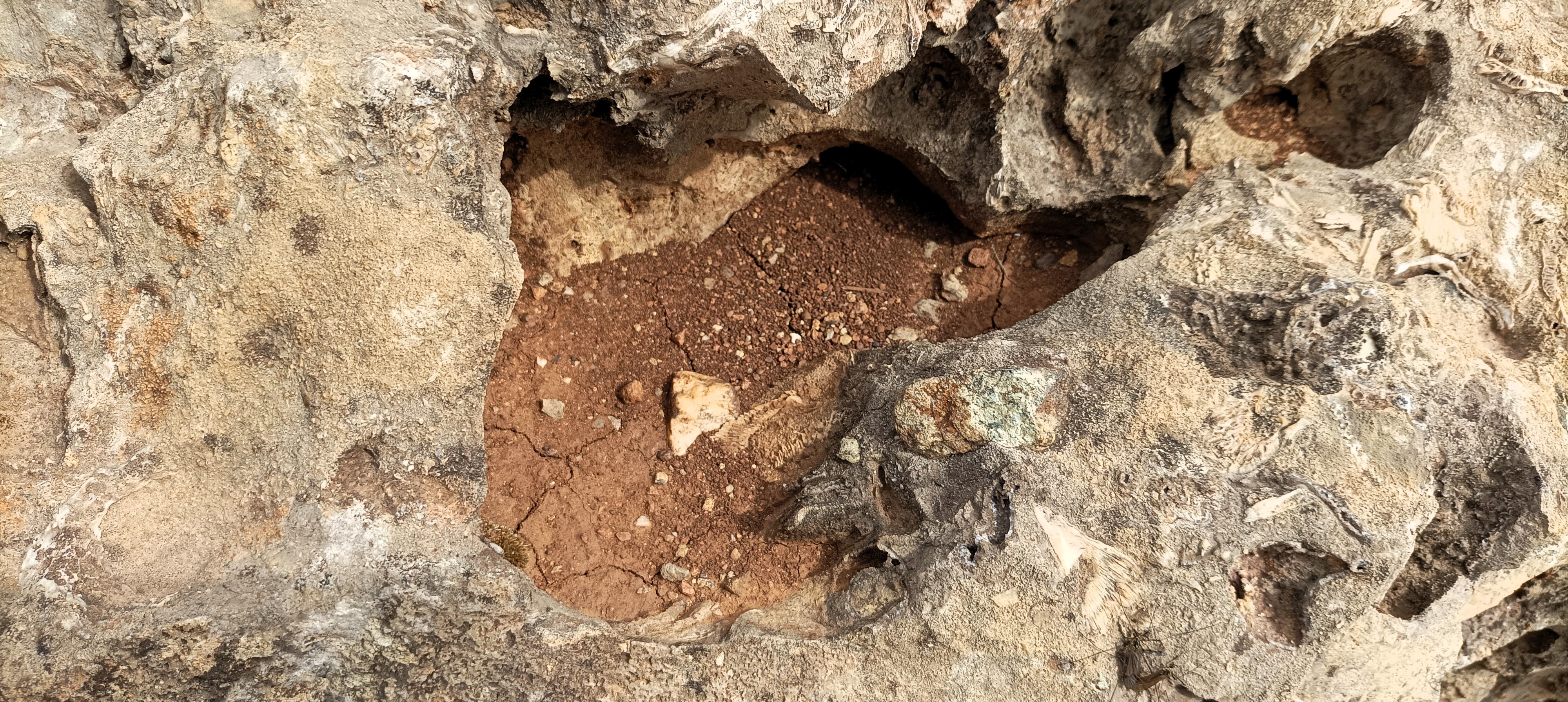
This limestone outcrop from El Berrocal, near Almadén de la Plata (Seville, Spain), illustrates one of the most discreet yet important stages of soil formation. 🪨🌱
The cavity visible in the rock was created by the gradual dissolution of limestone. Slightly acidic rainwater, enriched with carbon dioxide from the atmosphere and from soil respiration, reacts with calcium carbonate and slowly enlarges fractures, pores, and depressions. This process, known as karst weathering, creates small pockets capable of trapping fine material.
The reddish sediment accumulated inside the hollow is a mixture of particles produced by rock alteration and fine material transported by wind and runoff. Dust carried through the atmosphere may travel hundreds or even thousands of kilometres before being deposited on the landscape. Once trapped in protected cavities, these particles are less easily removed by erosion.
🍃 Wind-blown dust, clay minerals, iron oxides, organic residues, pollen, microorganisms, and tiny plant remains progressively accumulate within these natural receptacles. Moisture is retained for longer periods than on the surrounding bare rock, creating favourable conditions for biological activity.
Over time, these small sediment-filled hollows become microhabitats where the earliest stages of soil development take place. Roots, lichens, mosses, bacteria, and fungi contribute organic matter and accelerate mineral transformation, gradually converting loose sediment into an incipient soil.
🔬 Although only a few centimetres thick, these soil patches represent the foundation of future ecosystems. They demonstrate how life and geology interact, transforming a dissolved cavity in limestone into a nursery for soil formation and plant colonisation.
Ahora, en español:
Este afloramiento de roca caliza de El Berrocal, cerca de Almadén de la Plata (Sevilla), ilustra una de las etapas más discretas pero también más importantes de la formación del suelo. 🪨🌱
La cavidad visible en la roca se ha originado por la disolución progresiva de la caliza. El agua de lluvia, ligeramente ácida por su contenido en dióxido de carbono atmosférico y procedente de la respiración biológica, reacciona con el carbonato cálcico y amplía lentamente fracturas, poros y depresiones. Este proceso, conocido como meteorización kárstica, genera pequeños huecos capaces de retener materiales finos.
El sedimento rojizo acumulado en la oquedad está formado por una mezcla de partículas procedentes de la alteración de la roca y de materiales finos transportados por el viento y la escorrentía. El polvo atmosférico puede recorrer cientos o incluso miles de kilómetros antes de depositarse sobre el paisaje. Una vez atrapadas en estas cavidades protegidas, las partículas tienen menos probabilidad de ser eliminadas por la erosión.
🍃 Polvo transportado por el viento, minerales arcillosos, óxidos de hierro, restos orgánicos, polen, microorganismos y diminutos restos vegetales se acumulan progresivamente en estos receptáculos naturales. Además, la humedad permanece más tiempo en estas depresiones que sobre la roca desnuda circundante, favoreciendo la actividad biológica.
Con el paso del tiempo, estos pequeños huecos rellenos de sedimentos se convierten en microhábitats donde tienen lugar las primeras fases del desarrollo del suelo. Raíces, líquenes, musgos, bacterias y hongos aportan materia orgánica y aceleran la transformación mineral, convirtiendo gradualmente el sedimento suelto en un suelo incipiente.
🔬 Aunque apenas tengan unos centímetros de espesor, estos pequeños suelos representan la base de futuros ecosistemas. Constituyen un magnífico ejemplo de cómo la interacción entre geología y biología transforma una cavidad de disolución en la roca caliza en un auténtico vivero natural para la formación del suelo y la colonización vegetal.
Categories
Reuse
Creative Commons Attribution 4.0 International (CC BY 4.0) (opens in a new window)Credit: Antonio Jordán (distributed via imaggeo.egu.eu)








Comments
No comments yet. Be the first to share your thoughts.