

The architecture beneath our feet

First in English:
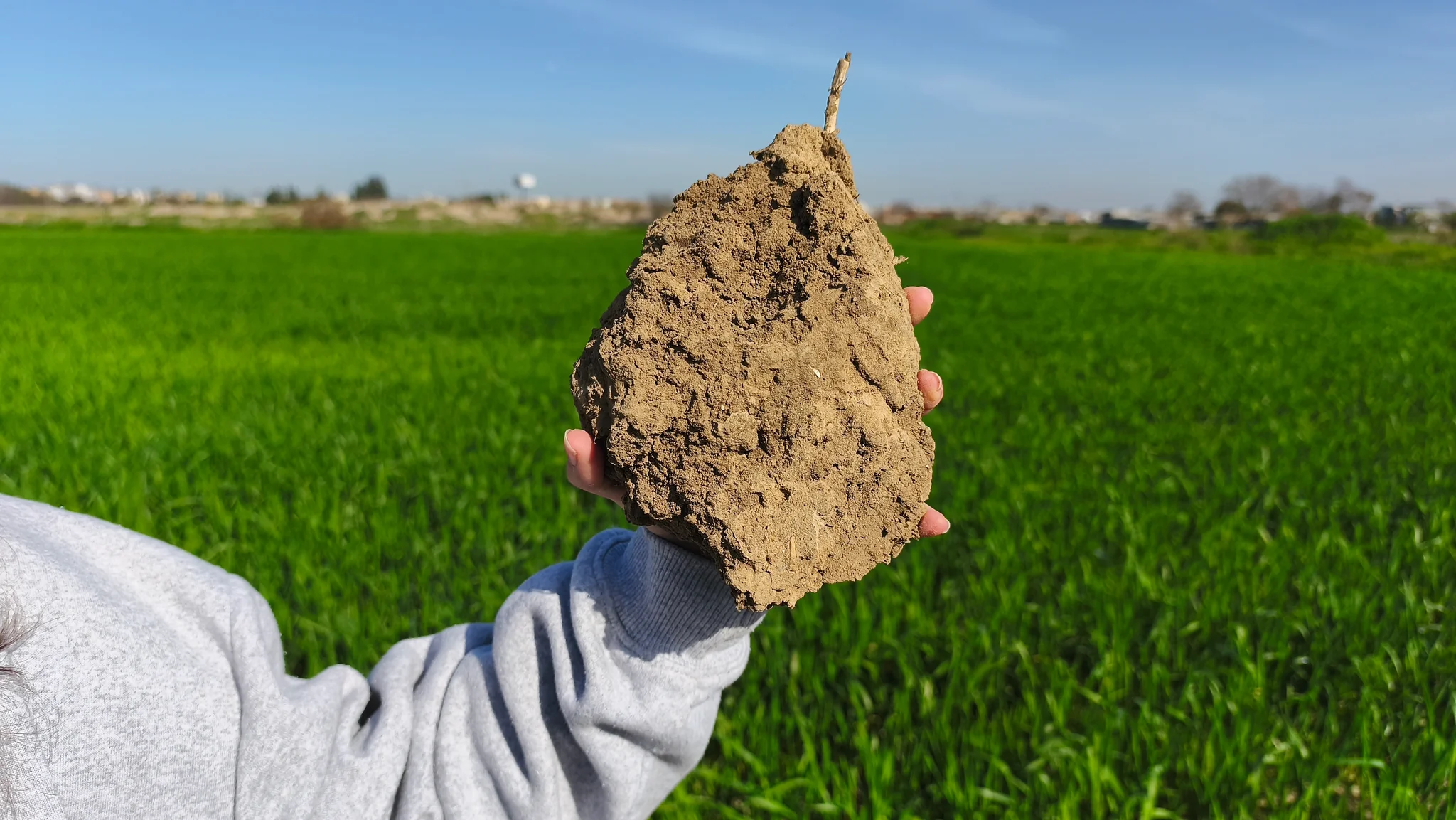
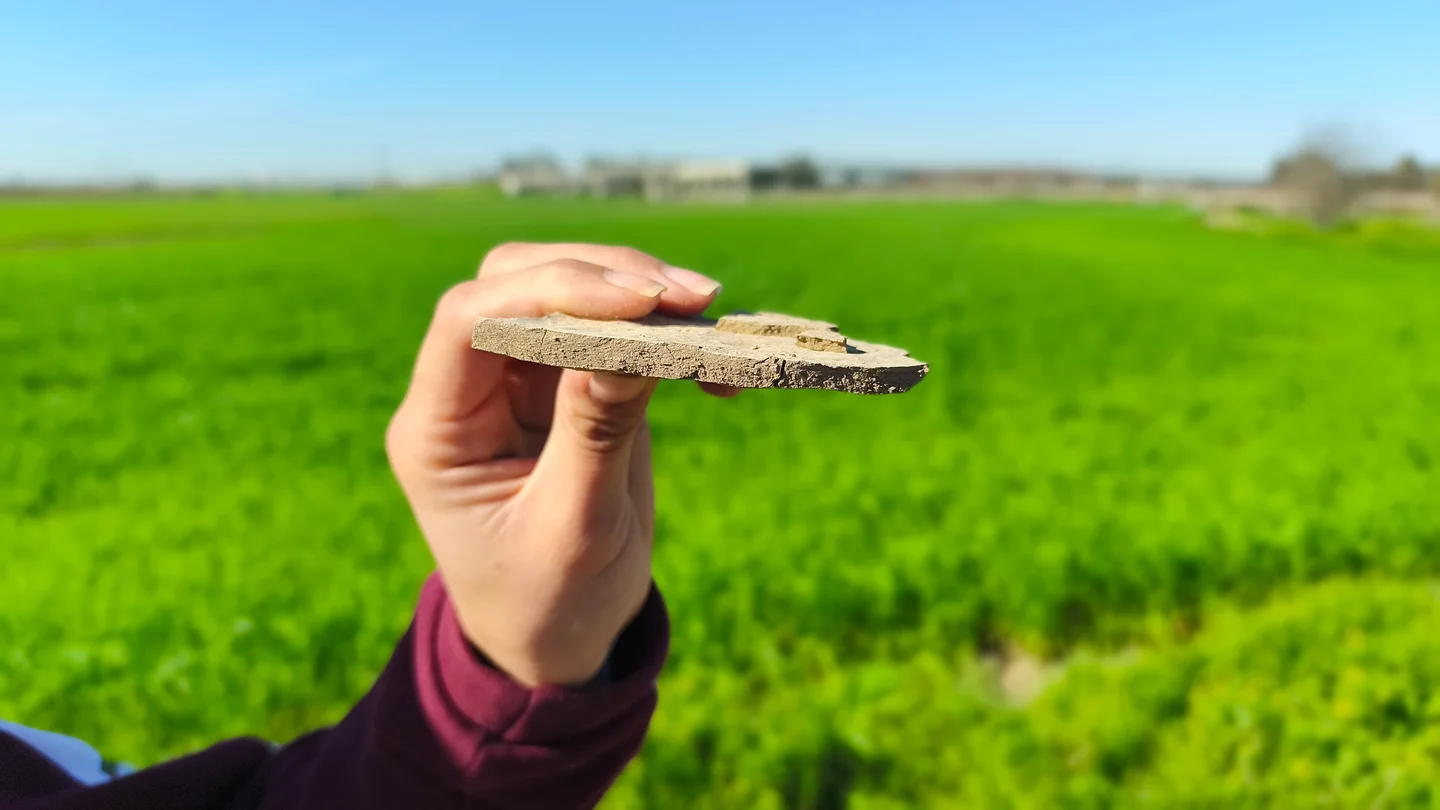
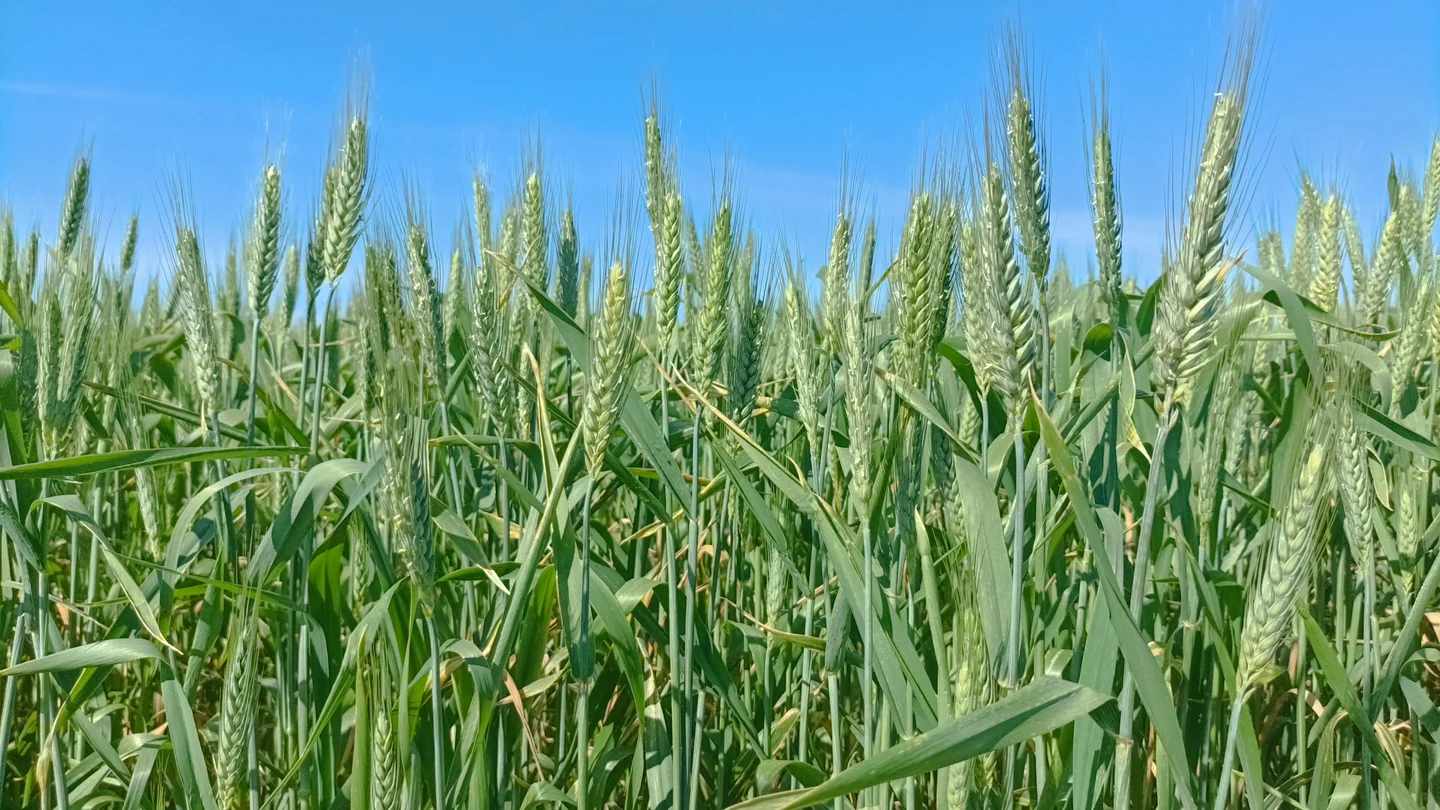
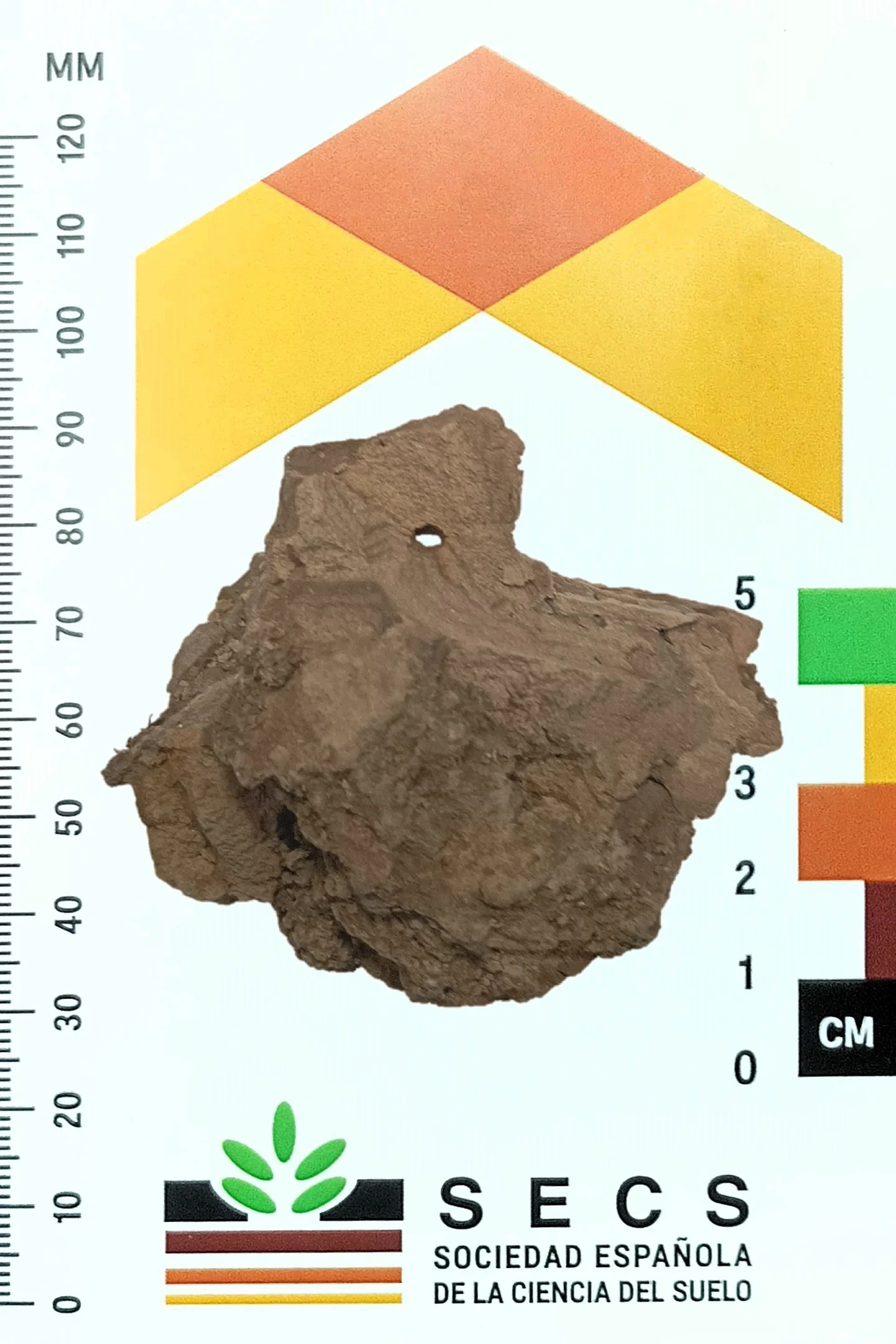
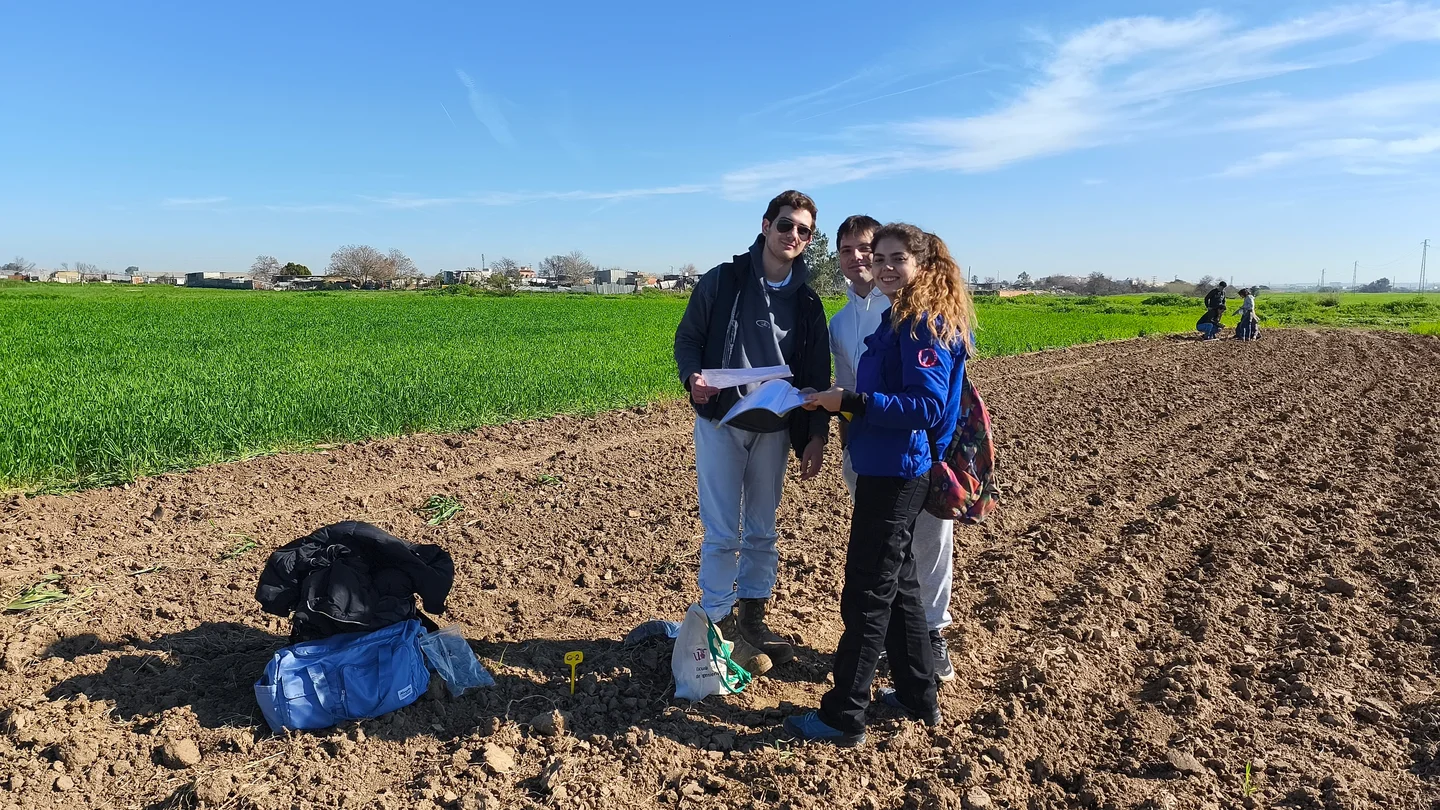
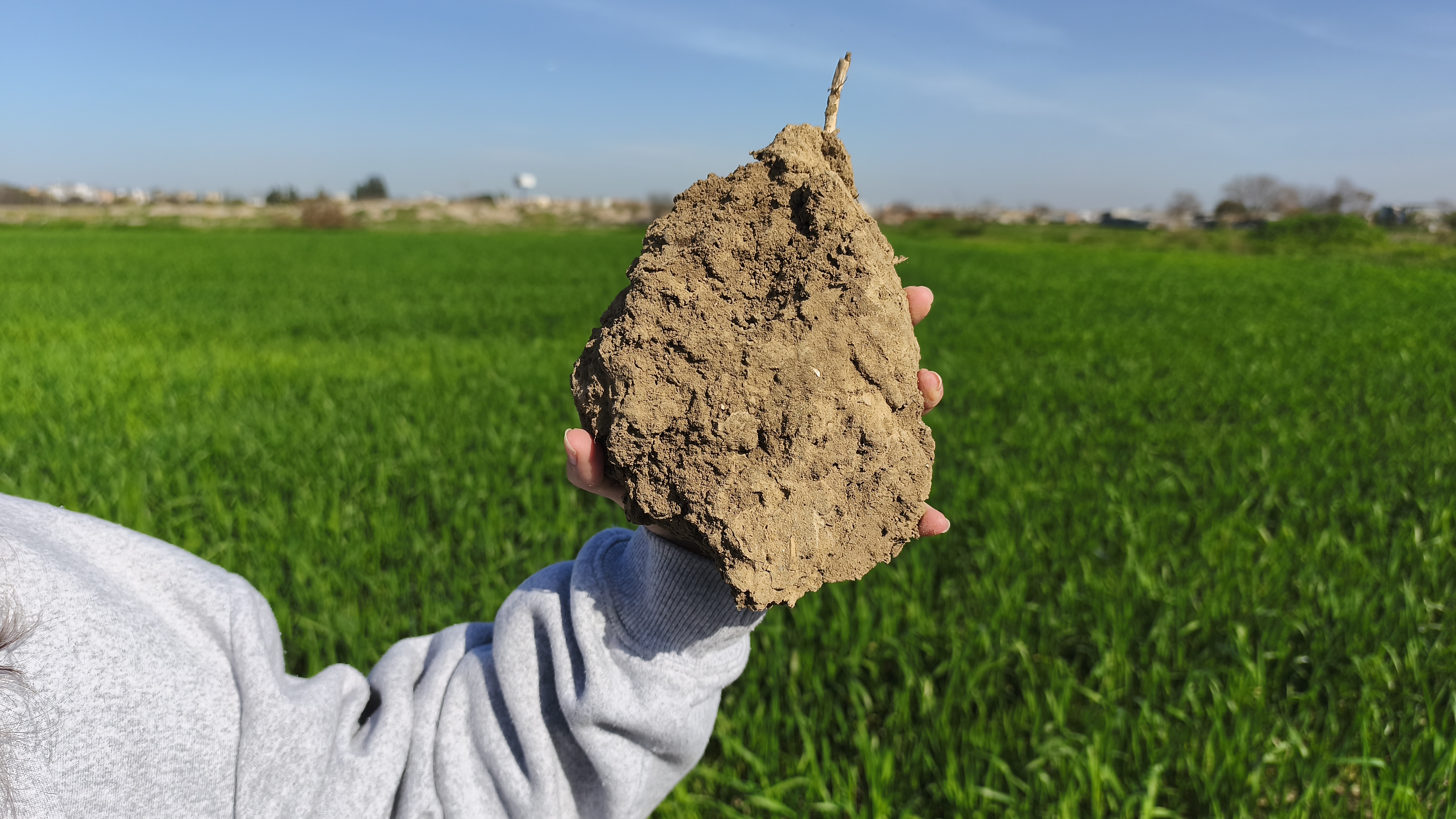
The photograph shows a soil science student from the School of Agricultural Engineering at the University of Seville holding a very coarse subangular blocky soil aggregate in her hand. The large aggregate dominates the foreground, while a green agricultural field stretches out behind her under a clear sky. The gesture highlights both the size and stability of the structural unit, making soil morphology visible and tangible during field practice.
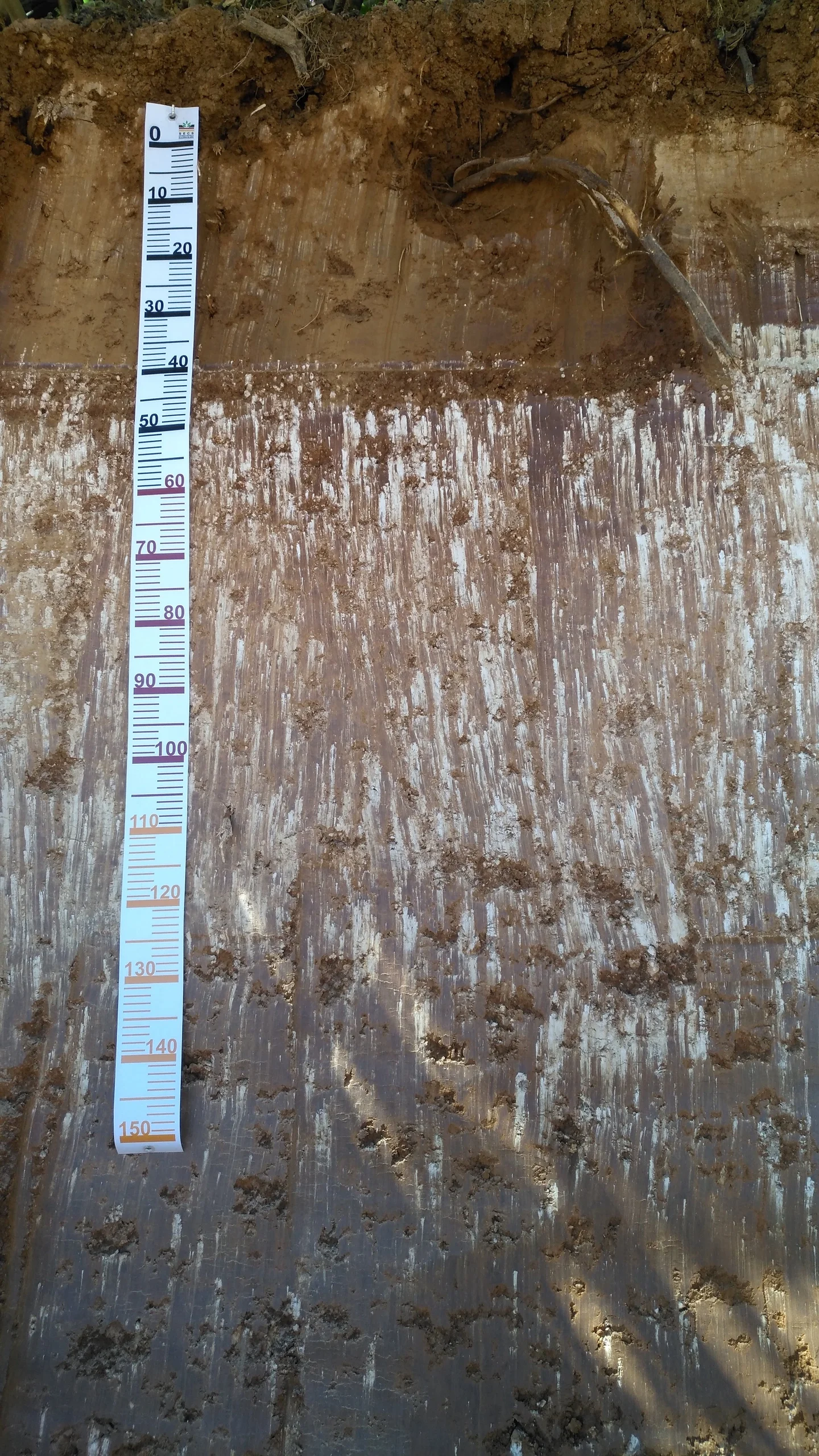
Soil aggregation refers to the arrangement of primary soil particles (sand, silt, and clay) into secondary units called aggregates. These aggregates can take different shapes, such as granular, platy, prismatic, columnar, or blocky. Subangular blocky aggregates are characterized by roughly equidimensional forms with slightly rounded edges. They commonly develop in surface or subsurface horizons where clay content is significant. Repeated wetting and drying cycles, shrink–swell processes, root growth, and biological activity create and widen cracks. Over time, these processes divide the soil into blocks. The partial rounding of edges reflects ongoing structural development and moderate weathering.
Ahora, en español:
La fotografía muestra a una estudiante de ciencia del suelo de la Escuela Técnica Superior de Agronomía de la Universidad de Sevilla sosteniendo en su mano un agregado de suelo en forma de bloque subangular muy grueso. El gran agregado ocupa el primer plano, mientras al fondo se extiende un campo verde bajo un cielo despejado. El gesto permite apreciar el tamaño y la estabilidad de esta unidad estructural, haciendo visible la morfología del suelo durante las prácticas de campo.
La agregación del suelo se refiere a la organización de las partículas primarias (arena, limo y arcilla) en unidades secundarias llamadas agregados. Estos pueden adoptar distintas formas: granular, laminar, prismática, columnar o en bloques. Los bloques subangulares presentan formas aproximadamente equidimensionales y aristas ligeramente redondeadas. Pueden desarrollarse en horizontessuperficiales o subsuperficiales con contenido apreciable de arcilla. Los ciclos de humectación y secado, los procesos de expansión y contracción, el crecimiento de raíces y la actividad biológica generan y amplían grietas. Con el tiempo, estas fracturas delimitan bloques individuales. El redondeamiento parcial de las aristas indica un grado intermedio de evolución estructural.
Categories
Reuse
Creative Commons Attribution 4.0 International (CC BY 4.0) (opens in a new window)Credit: Antonio Jordán (distributed via imaggeo.egu.eu)

Comments
No comments yet. Be the first to share your thoughts.