

Holding on to the rock

First in English:
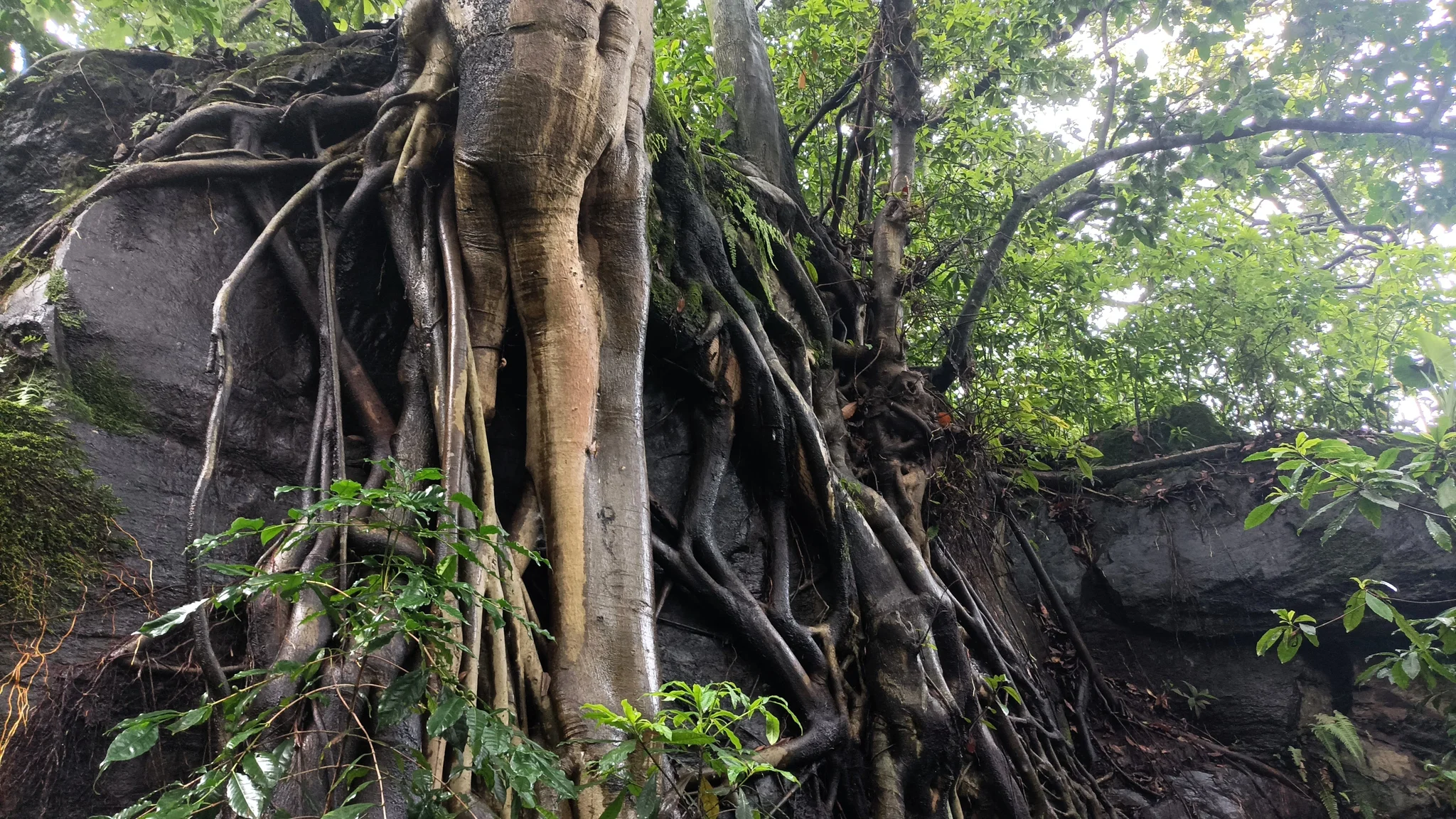
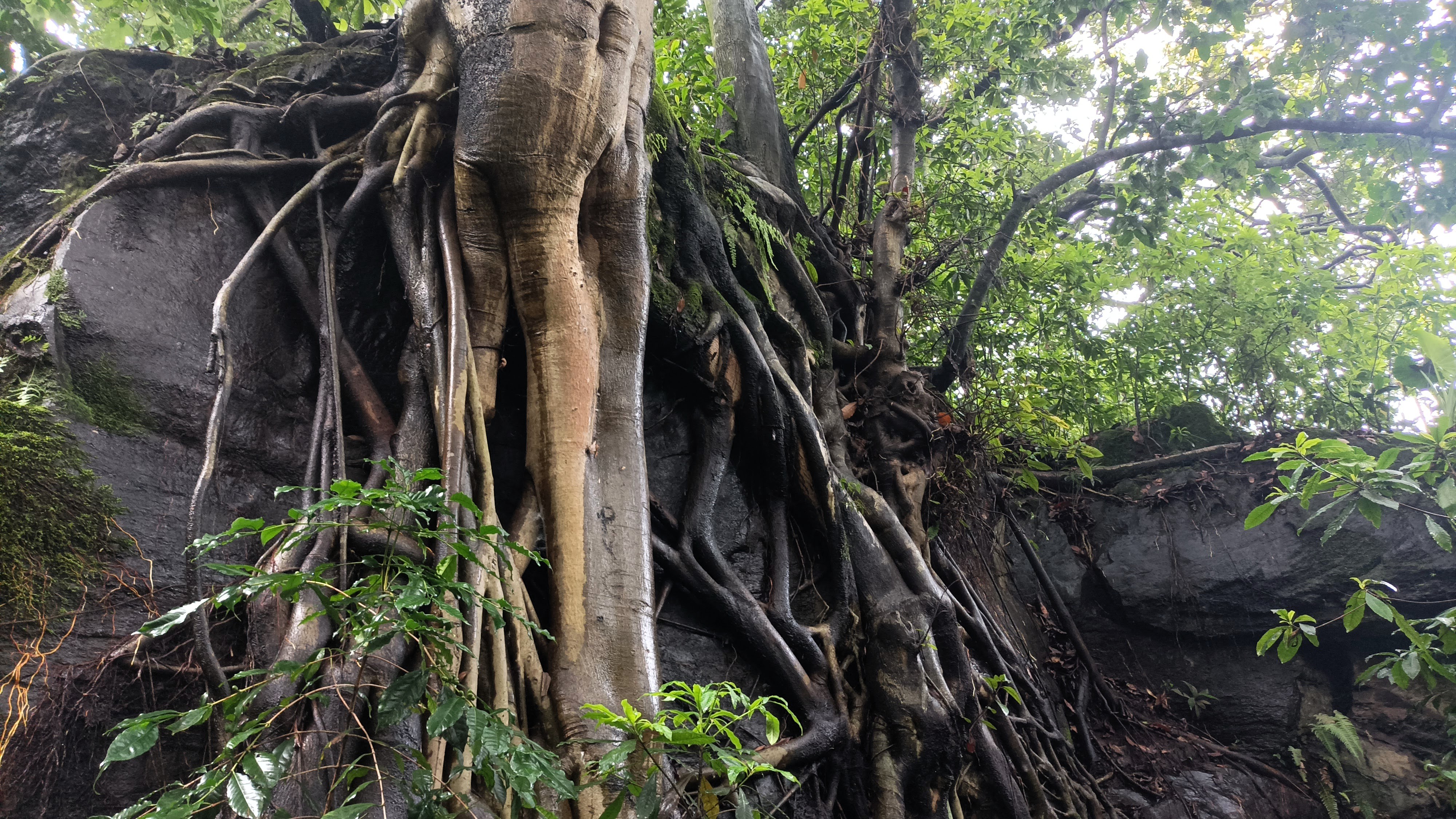
The roots in this photograph reveal just how closely trees can interact with the geological substrate. 🌳🪨 At the Barranca del Cupatitzio in Uruapan, Mexico, the tree has developed an extensive network of roots that spreads over and around the rock surface. Some roots are thick and woody, forming structural supports, while others are thinner and more sinuous, following cracks, irregularities and small cavities in the substrate.
Look closely at the centre of the photograph: the large roots appear almost like additional trunks, firmly gripping the rock. Their irregular shapes are not accidental. As roots grow, they explore the available space and take advantage of every crack or depression where water and nutrients may accumulate. In this way, the root system is both a physical anchoring structure and an active interface between the tree and its environment. 🌿
The photograph also shows another important feature: the rock is not simply a solid barrier. Its cracks and irregular surfaces create small niches where roots can penetrate and where moisture can remain available for longer. Even when there is little soil directly visible around the tree, roots can exploit these microsites to access water and mineral nutrients. Fine roots, which are much less conspicuous than the large structural roots shown here, are particularly important for this process because they provide much of the active surface through which water and nutrients are absorbed.
The dark, humid-looking rock surfaces and the mosses and other vegetation growing around the roots suggest a moist microenvironment. 🍃 This is a good reminder that the boundary between soil, rock and vegetation is often much less clear than it appears. Weathering of the rock produces mineral material, organic residues accumulate, microorganisms become established, and roots progressively modify their surroundings. Over time, these processes contribute to the development of a biologically active substrate.
The image therefore captures much more than an impressive tangle of roots. It shows a continuous interaction between biology and geology: the rock provides a structure that the roots can colonise, while the roots physically explore, stabilise and gradually modify their environment. In places where soil is shallow or discontinuous, this ability can make the difference between simply growing on a rock and successfully establishing a tree. 🌳🪨
Ahora en español:
Las raíces de esta fotografía muestran hasta qué punto los árboles pueden interactuar estrechamente con el sustrato geológico. 🌳🪨 En la Barranca del Cupatitzio, en Uruapan (México), el árbol ha desarrollado una extensa red de raíces que se extiende sobre la superficie de la roca y alrededor de ella. Algunas son gruesas y leñosas y funcionan como elementos estructurales, mientras que otras son más finas y sinuosas y siguen las grietas, irregularidades y pequeñas cavidades del sustrato.
Si nos fijamos en el centro de la fotografía, las grandes raíces parecen casi troncos adicionales que se aferran firmemente a la roca. Su forma irregular no es casual. A medida que crecen, las raíces exploran el espacio disponible y aprovechan cualquier grieta o depresión en la que pueda acumularse agua y materia mineral. De este modo, el sistema radical funciona simultáneamente como una estructura de sujeción física y como una interfaz activa entre el árbol y su entorno. 🌿
La fotografía muestra además algo importante: la roca no es simplemente una barrera sólida. Sus grietas e irregularidades crean pequeños nichos en los que las raíces pueden penetrar y donde la humedad puede permanecer durante más tiempo. Aunque alrededor del árbol apenas veamos suelo, las raíces pueden aprovechar estos pequeños espacios para acceder al agua y a los nutrientes minerales. Las raíces finas, mucho menos llamativas que las grandes raíces estructurales que dominan la imagen, son especialmente importantes en este proceso, ya que proporcionan buena parte de la superficie activa mediante la que el árbol absorbe agua y nutrientes.
Las superficies oscuras y aparentemente húmedas de la roca, junto con los musgos y otras plantas que crecen alrededor de las raíces, sugieren además la existencia de un microambiente húmedo. 🍃 La imagen nos recuerda que la frontera entre suelo, roca y vegetación es mucho menos clara de lo que puede parecer. La meteorización de la roca produce material mineral, se acumulan restos orgánicos, se establecen microorganismos y las raíces van modificando progresivamente su entorno. Con el tiempo, estos procesos contribuyen a crear un sustrato biológicamente activo.
La fotografía muestra mucho más que una impresionante maraña de raíces. Es una imagen de la interacción continua entre biología y geología: la roca proporciona una estructura que las raíces pueden colonizar, mientras que estas exploran, estabilizan y modifican físicamente su entorno. En lugares donde el suelo es escaso o discontinuo, esta capacidad puede marcar la diferencia entre crecer simplemente sobre una roca y conseguir establecerse como árbol. 🌳🪨
Categories
Reuse
Creative Commons Attribution 4.0 International (CC BY 4.0) (opens in a new window)Credit: Antonio Jordán (distributed via imaggeo.egu.eu)
Comments
No comments yet. Be the first to share your thoughts.