

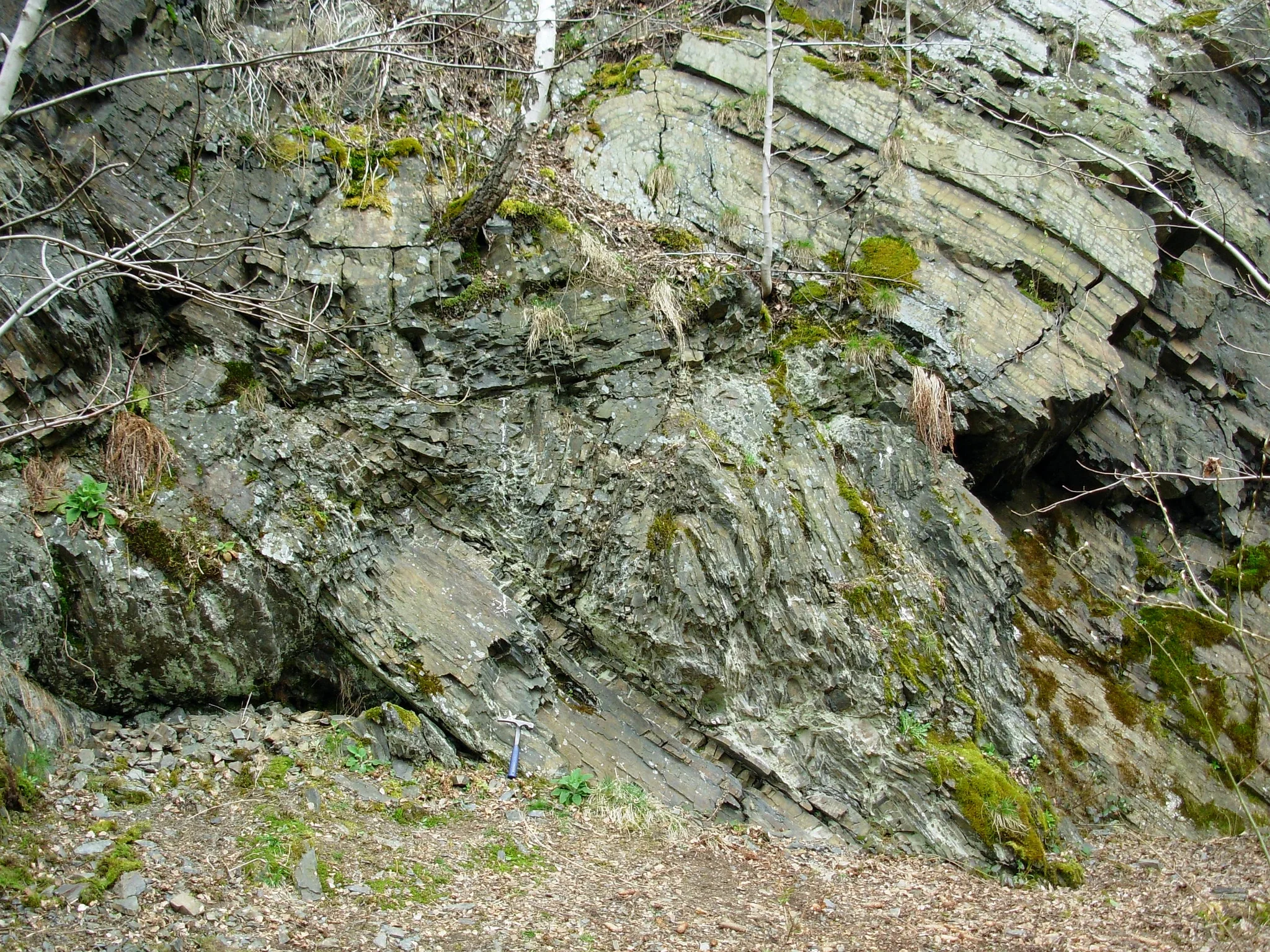
Triangle Zone

David Tanner
LIAG Institute for Applied Geophysics, Hannover, Germany
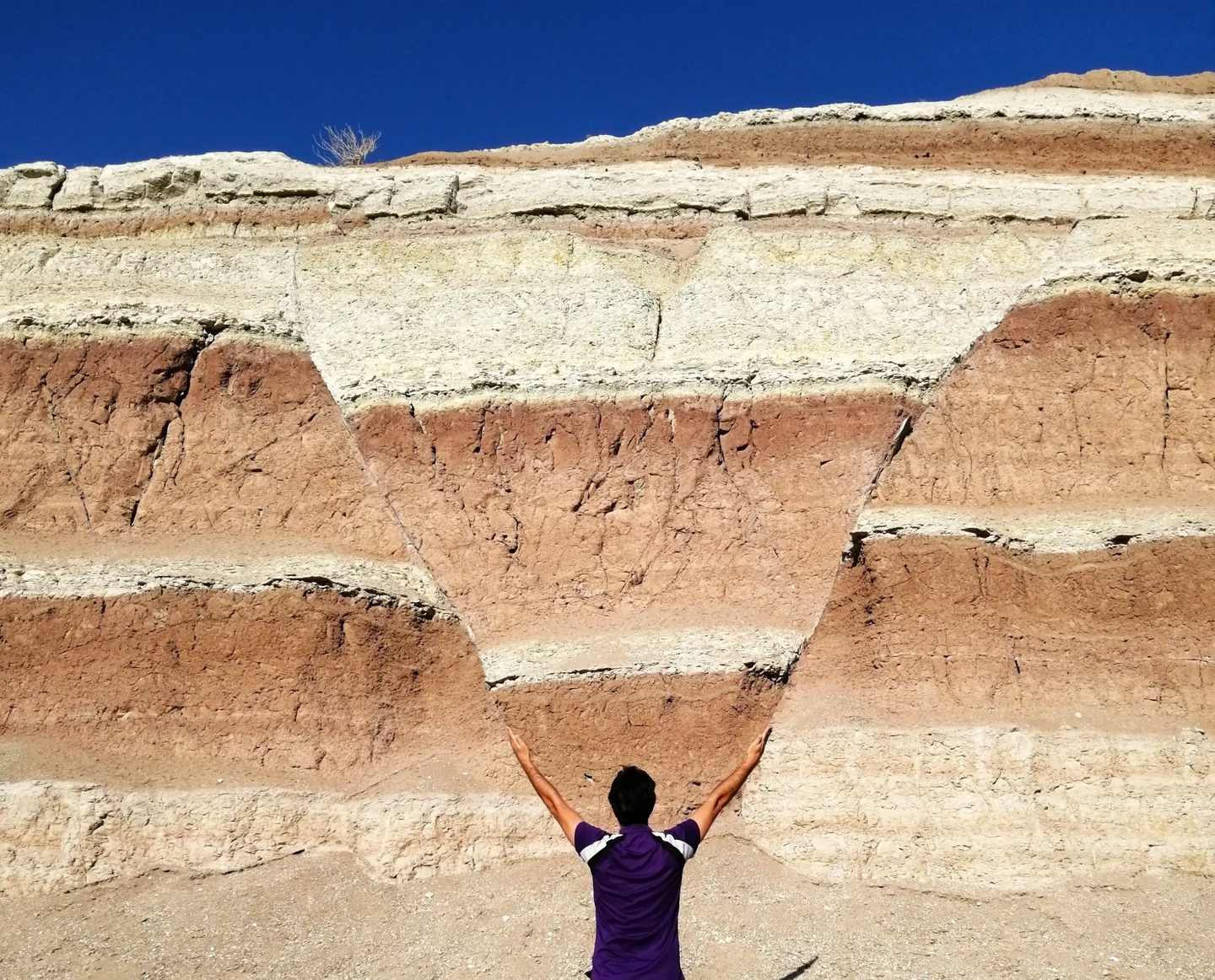
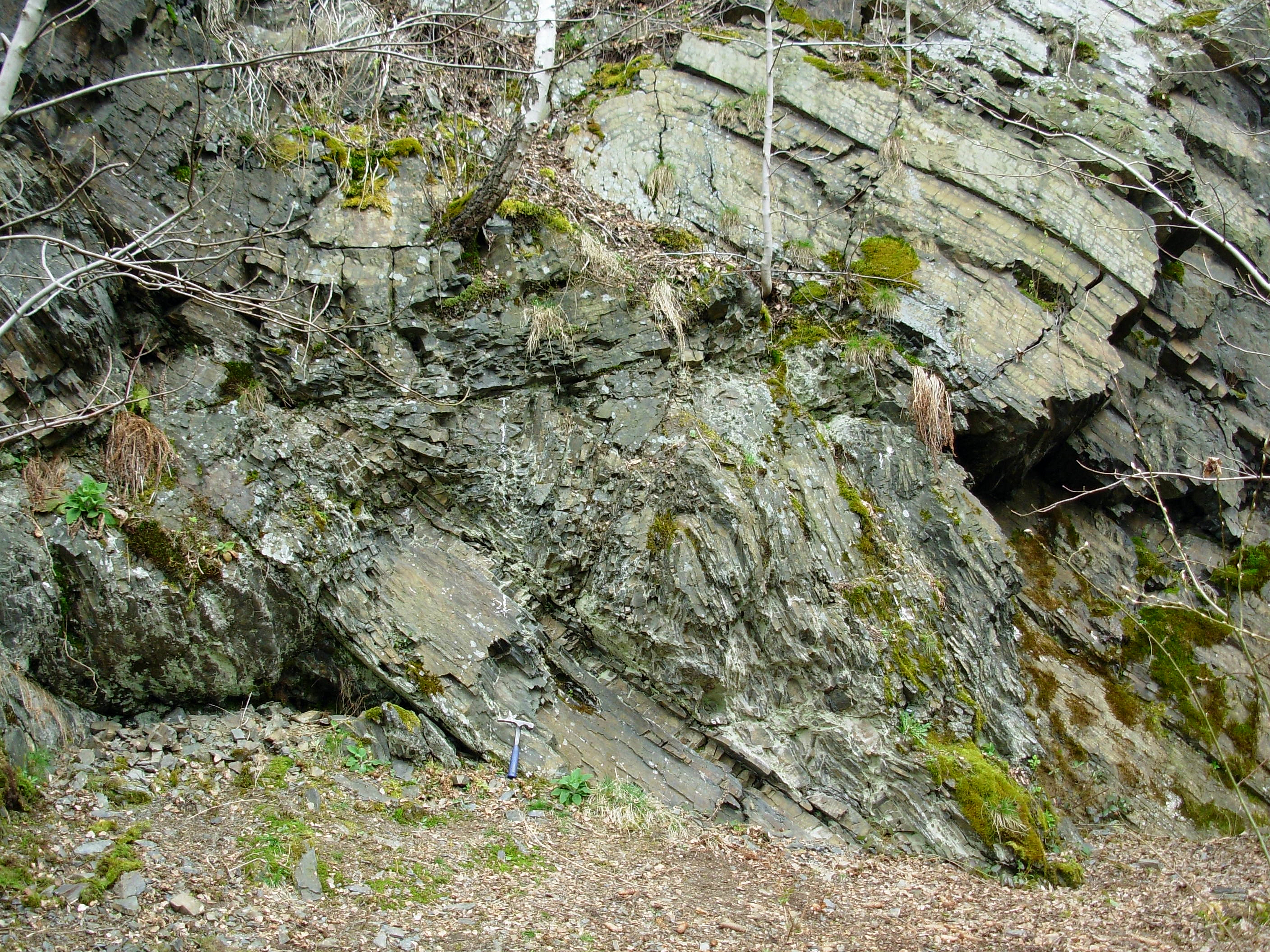
The Harz Mountains of North Germany expose Paleozoic sediments that were deformed during the Variscan Orogeny. Carboniferous siliclastic sediments were deposited in a foreland basin setting, quickly buried and compressively deformed. This structure is a triangle zone formed by two major thrusts, working against each other to form the triangle. Typically these structures are found at the front of a thrust belt, but this is in the centre. Perhaps it represent a snapshot of progressive deformation. More importantly, the core of the triangle zone is filled with isoclinal upright folds, not a smaller thrusts and duplexes, as conventional wisdom suggests. See Tanner et al. (2010) for details.
Categories
Reuse
Creative Commons Attribution-NonCommercial 3.0 Unported (CC BY-NC 3.0) (opens in a new window)Credit: David Tanner (distributed via imaggeo.egu.eu)
Properties
Type
Image
Format
JPG
Size
10.2 MB
Aspect
4:3
Width
4200 px
Height
3150 px
Brand
Nikon
Model
COOLPIX L1
Exposure
6 mm f/2.9 1/121 s ISO 50
Coordinates
51.8315, 10.4626
Tint
Light olive gray
Submitted
13 August 2014
Taken
20 April 2008








Comments
No comments yet. Be the first to share your thoughts.