

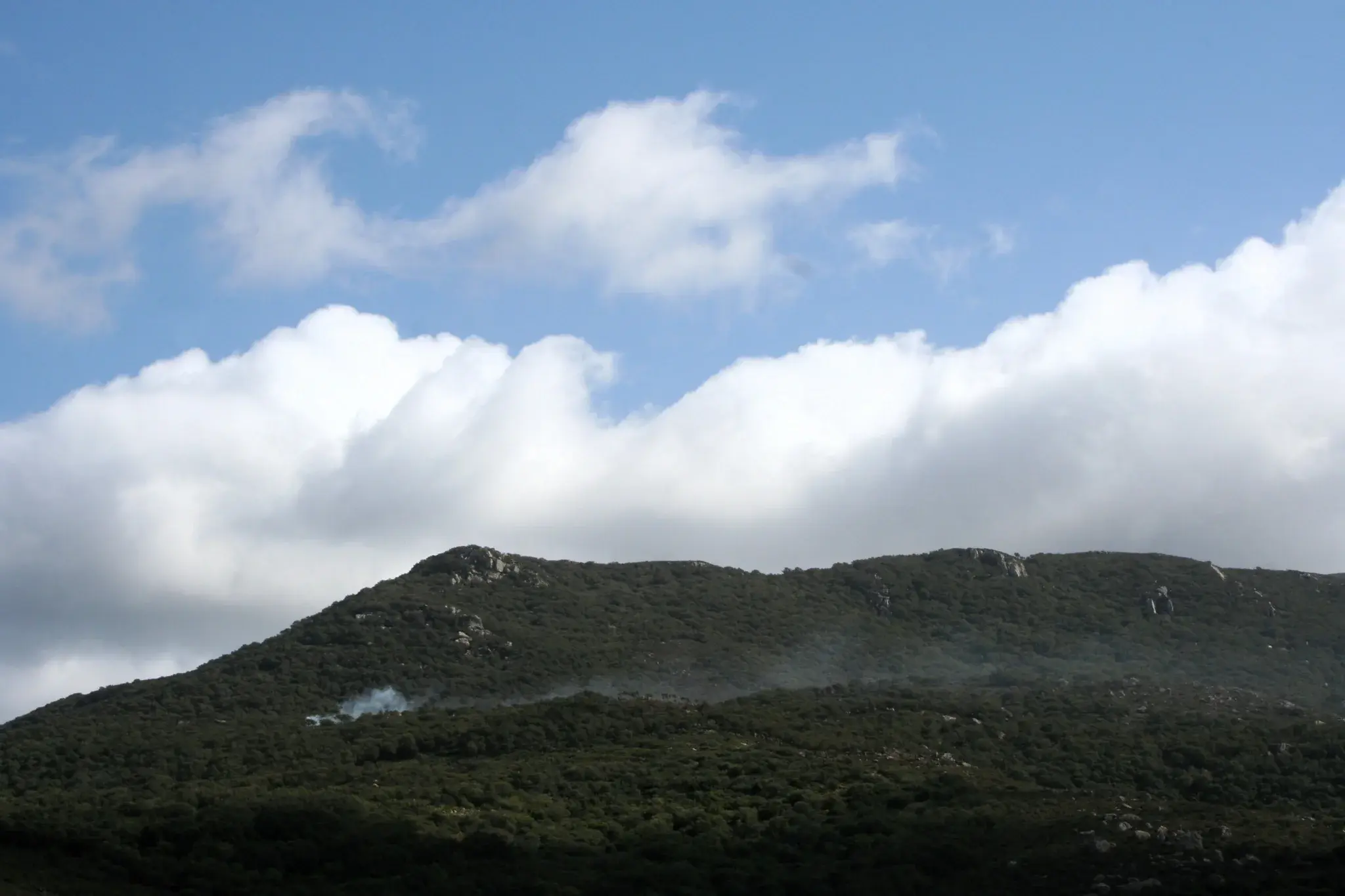

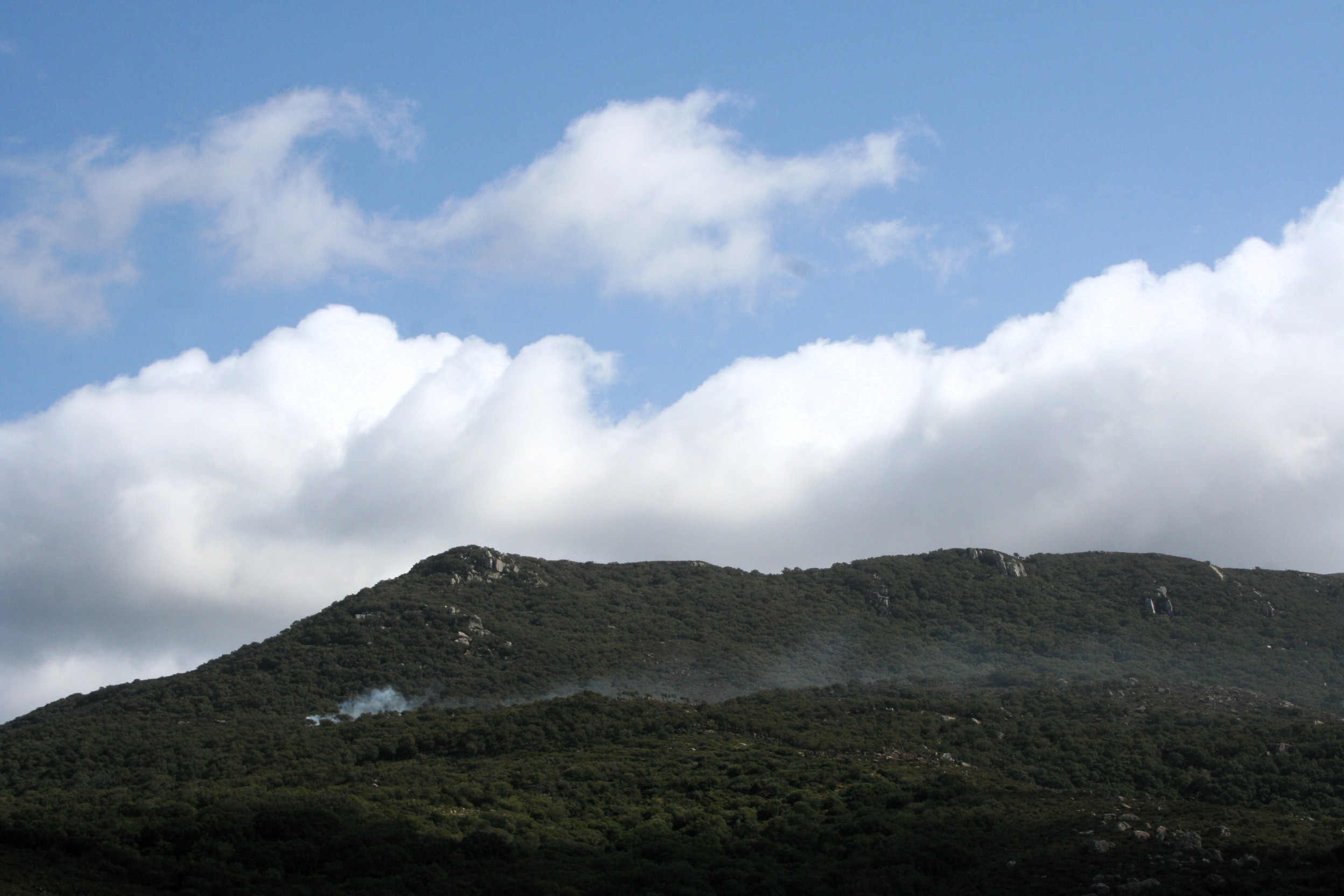
A brief flame in the cork oak shade (Los Alcornocales Natural Park, SW Spain)
by Antonio Jordán, University of Seville, Sevilla, Spain
First in English:
The photograph captures a small forest fire in a cork oak woodland (Quercus suber) within Los Alcornocales Natural Park, in southern Spain. Flames creep along the forest floor, consuming dry leaf litter and understory vegetation, yet they remain low and contained. A faint veil of smoke softens the light filtering through the canopy. The scene conveys tension, but not catastrophe: a brief disturbance that left patches of ash while the forest structure remains largely intact.
Low-severity fires such as this are part of the ecological dynamics of many Mediterranean ecosystems. In cork oak forests, periodic surface fires can reduce accumulated fuel loads without severely damaging mature trees. Quercus suber is particularly well adapted to fire: its thick cork bark acts as a natural thermal insulator, protecting the vascular cambium from heat damage. After mild fires, regeneration often occurs through resprouting from epicormic buds and from the soil seed bank. These processes contribute to ecosystem resilience, nutrient cycling, and structural heterogeneity. While high-severity fires can be destructive, small and low-intensity fires may help maintain the long-term stability of Mediterranean woodlands under appropriate climatic and management conditions.
Ahora, en español:
La fotografía muestra un pequeño incendio forestal en un alcornocal (Quercus suber) del Parque Natural Los Alcornocales, en el sur de España. Las llamas avanzan por el suelo del bosque, consumiendo hojarasca seca y vegetación del sotobosque, pero se mantienen bajas y contenidas. Una ligera neblina de humo suaviza la luz que atraviesa el bosque. La escena transmite tensión, pero no devastación: una alteración breve que dejó zonas con cenizas, mientras la estructura general del bosque permanece en gran medida intacta.
Los incendios de baja severidad forman parte de la dinámica ecológica de muchos ecosistemas mediterráneos. En los alcornocales, los fuegos superficiales periódicos pueden reducir la acumulación de combustible sin causar daños graves a los árboles adultos. Quercus suber está especialmente adaptado al fuego: su gruesa corteza de corcho actúa como aislante térmico natural y protege el cambium frente al calor. Tras incendios leves, es frecuente la regeneración mediante rebrote desde yemas epicórmicas y desde el banco de semillas del suelo. Estos procesos favorecen la resiliencia del ecosistema, el reciclado de nutrientes y la heterogeneidad estructural. Aunque los incendios de alta severidad pueden resultar destructivos, los fuegos pequeños y de baja intensidad pueden contribuir, bajo condiciones climáticas y de manejo adecuadas, a la estabilidad a largo plazo de los bosques mediterráneos.
Categories
Location
- Europe (3932)
- Southern Europe (1712)
- Spain (840)
- Exact location (-5.6079 W, 36.5125 N)
Tags
Colours
Image properties
2496 × 1664 px;
image/jpeg; 587.5 KB
Camera:
Canon EOS 350D DIGITAL
Taken on 30
March
2010
Submitted on 12 February 2026
Licence
Creative Commons Attribution-ShareAlike 3.0 Unported (CC BY-SA 3.0)
Credit
Antonio Jordán (distributed via imaggeo.egu.eu)
Share
Appreciate
Report